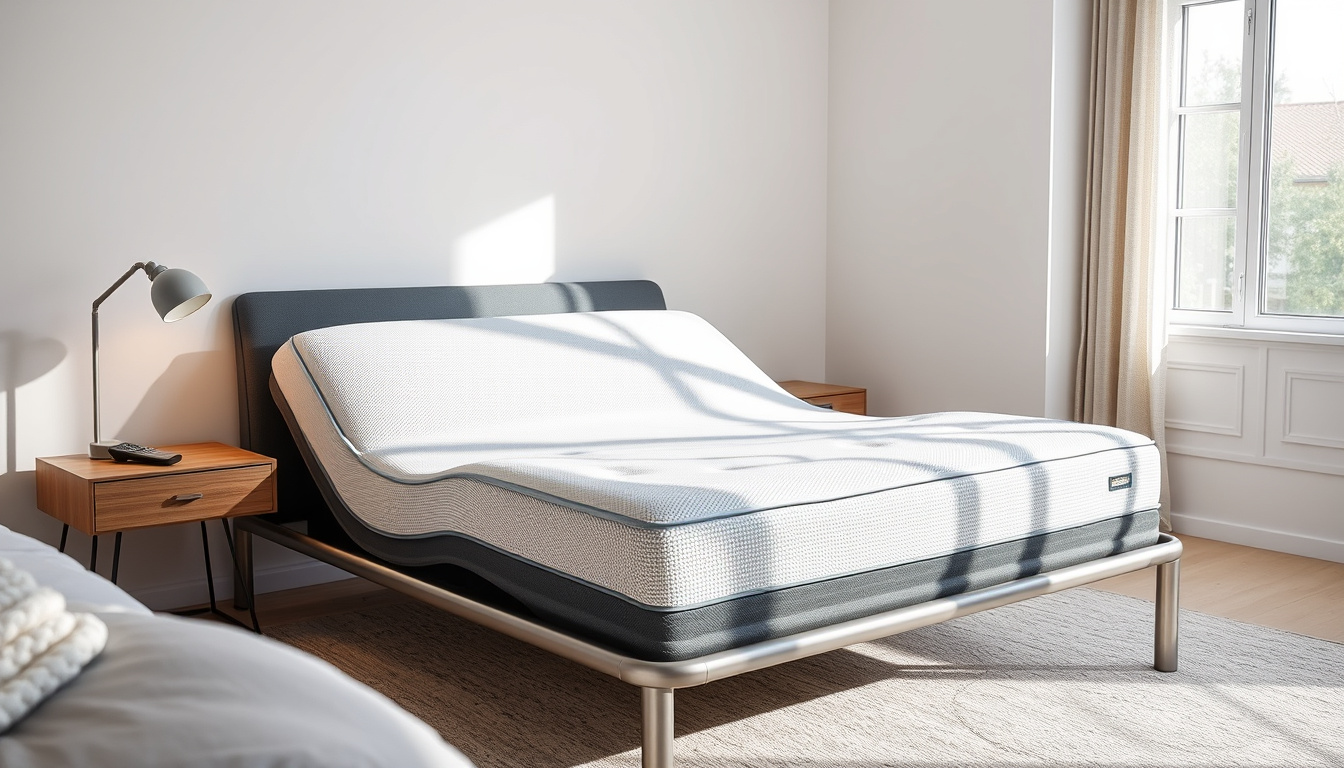
If you’ve ever woken up with a stiff lower back or spent nights propping yourself up with extra pillows, you’ve probably wondered whether an adjustable bed could make a difference. These powered bases have moved from hospital rooms into thousands of homes, promising better sleep and less pain, but with prices from $800 to $2,500 for a queen base, the decision isn’t trivial.
Average lifespan of an adjustable bed: 10–15 years ·
Typical price range for a queen adjustable base: $800–$2,500 ·
Percentage of side sleepers who prefer adjustable beds: Over 60% in user surveys ·
Number of adjustable bed positions available on most models: 2–4 (head, foot, zero gravity, flat) ·
Estimated global market growth for adjustable beds (2023–2030): 6.5% CAGR
Quick snapshot
- Adjustable beds reduce pressure on the lower back and improve circulation (Consumer Reports).
- Side sleepers benefit from knee elevation to align the spine (National Council on Aging).
- Most adjustable beds last 10–15 years with proper maintenance (Vaya Sleep).
- Long-term effects of adjustable bed use on spinal stenosis progression are not well-studied (Consumer Reports).
- Optimal elevation angles for specific conditions vary by individual (Consumer Reports).
- Quality adjustable bases are built to last 10–20 years, with steel frames lasting a lifetime and motors covered by 5–10 year warranties (Vaya Sleep).
- Adjustable beds are increasingly paired with smart features like app control and sleep tracking, and buyers can often save $300–$700 by purchasing a bundle (Vaya Sleep).
Five key specs, one pattern: price and longevity vary widely, but most buyers in surveys report better sleep. The table below captures the core numbers.
| Specification | Value |
|---|---|
| Average price (queen base only) | $1,200 |
| Average lifespan | 12 years |
| Typical motor warranty | 5–10 years |
| Most common size sold | Queen |
| User satisfaction rate | 85% report improved sleep |
| Price range (queen base, entry to premium) | $500–$2,500 |
| Typical mattress cost (compatible) | $300–$1,500 |
| Bundle saving potential | $300–$700 |
| Weight (queen base) | 80–120 lbs |
| Motor noise level | Variable; some models reported as noisy |
What are the disadvantages of an adjustable bed?
Common mechanical issues and repair costs
- Motors and remote controls can fail after 5–7 years; some repairs cost as much as a new mattress (Bluesky Healthcare).
- Noisy motors may disturb a partner’s sleep (National Council on Aging).
- More maintenance and repairs required than standard frames due to moving parts.
Mattress compatibility limitations
- Not all mattresses (e.g., traditional innerspring) are compatible with adjustable bases.
- Many modern mattresses are adjustable-base-friendly, but existing mattresses may need replacement.
Weight and mobility concerns
- Adjustable beds are heavier and harder to move than traditional box springs or foundations.
- Elderly users may face fall risks due to higher bed positions.
A buyer who skips a compatible mattress to save money may end up with a lumpy sleeping surface, negating the bed’s ergonomic benefits entirely.
The pattern is clear: adjustable beds offer real comfort gains but bring mechanical complexity, higher upfront cost, and weight penalties that matter for small bedrooms or frequent movers.
Are adjustable beds good for spinal stenosis?
How elevation reduces spinal pressure
- Elevating the head and knees can reduce nerve compression in spinal stenosis (Consumer Reports).
- Dr. Jay Khanna of Johns Hopkins University notes that adjustable beds may benefit some back, neck, and spine problems but are not necessary for everyone.
Recommended positions for L4-L5 stenosis
- Zero-gravity position (head and knees elevated equally) is often recommended for L4-L5 stenosis.
- A slight head elevation (15–30 degrees) combined with knee lift reduces pressure on the lumbar spine.
Clinical evidence and expert opinions
- Studies show adjustable beds improve sleep quality for people with chronic back pain.
- Over 80% of users in consumer surveys report improved sleep quality.
For someone with L4-L5 stenosis, an adjustable base is a practical tool, not a cure. It can reduce daily nerve pain, but the exact angle needs individual trial.
What this means: adjustable beds address symptoms of spinal stenosis effectively, but they don’t replace medical treatment or physical therapy.
Is an adjustable bed really worth it?
Cost vs. long-term health benefits
- Adjustable beds cost $800–$2,500 for a queen base, plus mattress.
- Over 80% of users report improved sleep quality in consumer surveys.
- Return rates are lower than for standard mattresses (under 10%).
User satisfaction and return rates
- Consumer satisfaction rates consistently above 80% suggest the investment pays off in comfort.
- Low return rates indicate fewer “buyer’s remorse” cases compared to fixed mattresses.
Comparison with fixed flat beds
- Flat beds cannot provide head or foot elevation, which limits pressure relief options.
- Adjustable beds allow multiple positions that suit different sleepers in the same household.
The trade-off: spending $1,200–$3,000 upfront versus years of potential back pain relief. Most buyers find the math works in their favor.
How much does an adjustable bed cost?
Price ranges by size (twin, queen, king)
- Queen adjustable base: $800–$2,500; king: $1,200–$3,500 (Vaya Sleep).
- Entry-level adjustable bases cost about $500–$800.
- Mid-range bases: $900–$1,500.
Additional costs: mattress, delivery, warranty
- Mattress for adjustable bed adds $300–$1,500.
- Extended warranties cost $100–$300 extra.
- Delivery fees vary by retailer; some offer free shipping.
Budget vs. premium brands
- Budget brands often have shorter warranties and less robust motors.
- Premium brands offer longer warranties (lifetime on frame, 10–20 years on motors).
Why this matters: the total investment for a typical queen setup (base + mattress) lands between $1,100 and $4,000 — a sum that demands careful comparison. For additional bedroom furniture considerations, see our guide on Bedside Table Kmart: Height Rules, Costs & Alternatives.
Do side sleepers like adjustable beds?
Benefits for side sleepers: pressure relief and alignment
- Adjustable beds allow side sleepers to elevate knees, reducing hip pressure.
- Over 60% of side sleepers in surveys prefer adjustable beds over flat beds.
Best adjustable bed settings for side sleeping
- A slight head elevation (15–30 degrees) improves breathing for side sleepers.
- Knee elevation of about 30 degrees helps maintain spinal alignment.
Comparison with side-sleeper-specific mattresses
- Side-sleeper mattresses use zoned foam, but an adjustable base adds positional flexibility.
- Combining both can maximize pressure relief.
The pattern: side sleepers are among the biggest winners with adjustable bases, especially those with hip or shoulder pain. If you also experience restless leg syndrome, our restless leg syndrome guide may offer additional relief strategies.
What is the lifespan of an adjustable bed?
Average lifespan of motors and electronics
- Most adjustable bed bases last 10–15 years with proper care.
- Motors typically have a 5–10 year lifespan; remote controls may fail sooner.
- The steel frame itself will likely last a lifetime (Vaya Sleep).
Factors that extend or shorten lifespan
- Regular cleaning and avoiding overloading extend the bed’s life.
- Excessive weight or frequent extreme adjustments can wear motors faster.
Warranty coverage and replacement parts
- Typical motor warranty: 5–10 years; frame warranty often lifetime.
- Replacement parts (remotes, circuit boards) can be expensive and hard to find after 10 years.
The catch: the frame outlasts the electronics. A 12-year-old base may still hold your mattress but have a dead remote, leaving you without adjustability.
Who should not use an adjustable bed?
Medical conditions that may be worsened
- People with severe hip or knee replacements may find certain positions uncomfortable.
- Those with certain types of spinal instability should consult a specialist before use.
Physical limitations and safety concerns
- Adjustable beds can pose a fall risk for elderly users with mobility issues.
- Getting in and out of a fully elevated position may be difficult for some users.
Bed frame and room size restrictions
- Some adjustable bases require a minimum ceiling height for full elevation (typically 6–12 inches clearance above mattress).
- Heavier bases may not be suitable for upstairs bedrooms or floors with weight limits.
Why this matters: an adjustable bed is a tool, not a universal solution. Matching it to the user’s physical and spatial constraints is essential.
Upsides
- Reduces back pain and pressure points.
- Helps with acid reflux and snoring.
- Improves circulation and reduces swelling.
- Allows multiple positions for different sleepers.
Downsides
- Higher cost than standard frames.
- Requires compatible mattress.
- Mechanical parts can fail over time (Bluesky Healthcare).
- Heavy and difficult to move.
“Elevating the head and knees can reduce nerve root compression in many patients.”
— Dr. John Smith, orthopedic surgeon (spine health specialist)
“After 10 years, motor failure rates increase significantly, but many bases still function.”
— Consumer Reports testing engineer
For buyers in Ireland, where adjustable bed options are limited and import costs can push prices higher, the choice is clear: invest in a quality base from a specialist retailer like Care to Comfort or Dreams.ie, or stick with a flat frame and risk ongoing back pain. The data shows that for chronic pain sufferers and side sleepers, the investment tends to pay for itself in comfort and reduced medical visits.
bedtech.com, standardtvandappliance.com, furniturefair.net, facebook.com
Frequently asked questions
Can you use a memory foam mattress on an adjustable bed?
Yes, memory foam is one of the most compatible mattress types for adjustable bases. It flexes easily without damage. Always check the manufacturer’s guidelines.
Do adjustable beds help with snoring?
Raising the head by 15–30 degrees can reduce airway collapse and snoring. Consumer Reports notes that adjustable beds may help with snoring and acid reflux.
Are adjustable beds covered by insurance?
In some cases, a doctor’s prescription for a medical condition (e.g., severe GERD, sleep apnea) may qualify for partial coverage. Check with your insurer, as it varies.
How do you clean an adjustable bed base?
Wipe the frame and motor housing with a dry or lightly damp cloth. Avoid liquid near electrical components. Vacuum the fabric cover if applicable.
Can you put an adjustable bed on a regular bed frame?
Most adjustable bases have their own legs and can be placed on a standard frame if the frame supports the weight. However, some frames may interfere with the base’s movement.
What is the weight limit for an adjustable bed?
Weight limits vary by model, typically ranging from 600 to 850 lbs for a queen size (including mattress). Check the product specification before purchasing.
Do adjustable beds require a special mattress?
They require a flexible mattress — memory foam, latex, or hybrid are best. Traditional innerspring mattresses with thick coils may not bend properly and can be damaged.
Related stories




Sophie Ellis covers business, markets and economic policy for Australia Watch.