
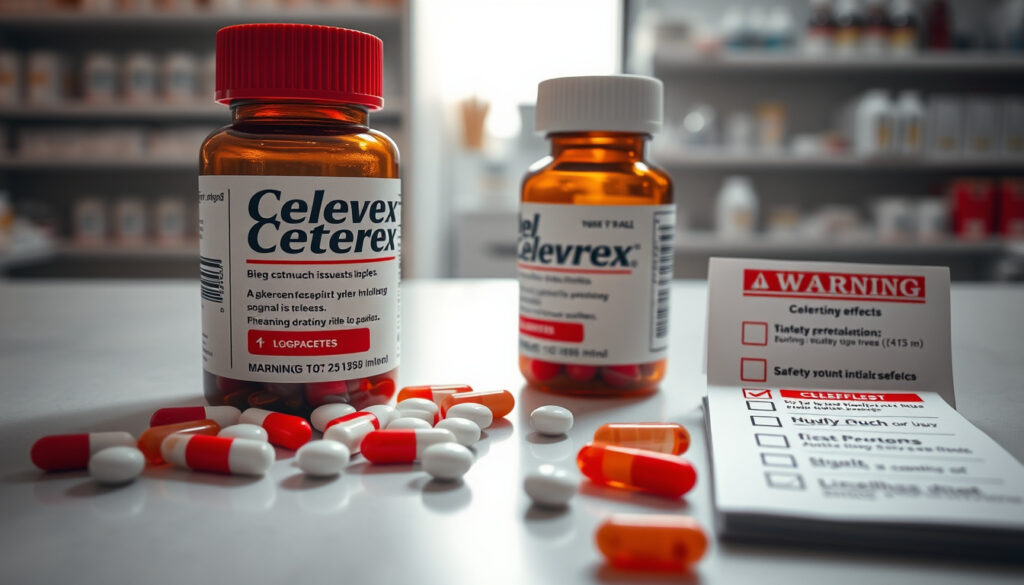
Celebrex (celecoxib) offers meaningful relief for inflammation but carries serious trade-offs. The FDA boxed warnings for cardiovascular and gastrointestinal risks aren’t bureaucratic formalities—they reflect documented harm, including 39 Health Canada-reported celecoxib-related deaths from heart and stroke side effects.
Common side effects: diarrhea, indigestion, abdominal pain, nausea, headache · Serious risks: blood clots, heart attack, stroke · Organ concerns: heart, liver, kidney
Quick snapshot
- Celebrex carries FDA boxed warnings for cardiovascular and gastrointestinal risks (GoodRx medication database)
- Most common side effects include diarrhea, indigestion, abdominal pain, vomiting, nausea, and headache (Medical News Today drug reference)
- Exact incidence rates of weight gain not publicly disclosed by manufacturers
- Long-term outcomes beyond 18 months still being studied
- Cardiovascular events can occur within the first few weeks of treatment (Medical News Today drug reference)
- Health Canada identified 18 months as a risk duration threshold for higher-dose use (Health Canada official safety review)
- Regulatory agencies continue monitoring cardiovascular safety data
- Clinical guidelines emphasize lowest effective dose for shortest duration
The following table summarizes key drug characteristics and risk thresholds for reference.
| Category | Details |
|---|---|
| Drug class | Celecoxib capsules, COX-2 inhibitor |
| Top mild effects | Diarrhea, indigestion, abdominal pain |
| Key warnings | Heart attack, stroke risk (FDA boxed warning) |
| Affected organs | Heart, liver, kidney |
| Dose threshold | Above 200 mg/day increases cardiovascular risk |
| Risk duration | Use beyond 18 months raises concerns at higher doses |
What is the main side effect of Celebrex?
Common mild effects
The most frequently reported side effects of Celebrex involve the digestive system. Clinical trials and patient reports consistently show diarrhea, indigestion, and abdominal pain among the top complaints (Medical News Today drug reference). These symptoms typically emerge early in treatment and may diminish as your body adjusts.
Frequently reported symptoms
Beyond gastrointestinal issues, headache and nausea are commonly reported. Cleveland Clinic notes that some patients experience increased blood pressure and kidney injury symptoms including decreased urine output and swelling of the ankles, hands, or feet (Cleveland Clinic drug monograph). Mayo Clinic adds that less common effects can include anxiety, constipation, decreased appetite, and ringing in the ears (Mayo Clinic medication database).
Mild side effects are manageable for most patients, but they can signal that your body is reacting to the medication—worth mentioning to your doctor.
Digestive discomfort often appears as the first sign of Celebrex sensitivity. If diarrhea or stomach pain persists beyond a week, contact your healthcare provider.
What are the worst side effects of Celebrex?
Cardiovascular risks
The most serious risks associated with Celebrex relate to the heart and circulatory system. Celebrex carries FDA boxed warnings for increased risk of serious cardiovascular problems including heart attack and stroke (GoodRx medication database). These events can occur at any time during treatment—sometimes within the first few weeks (Medical News Today drug reference).
Higher doses further increase cardiovascular risk. Health Canada’s safety review identified that doses above 200 mg per day may be linked with increased risk of serious heart and stroke side effects, especially in patients with pre-existing heart disease factors or those taking the drug for longer than 18 months (Health Canada official safety review). The risk profile at these higher doses is similar to high-dose diclofenac (≥150 mg/day) or ibuprofen (≥2400 mg/day).
Gastrointestinal dangers
Celebrex also carries FDA boxed warnings for gastrointestinal risks, specifically increased risk of gastrointestinal bleeding or ulcers (GoodRx medication database). In rare cases, these digestive problems can be fatal. The drug can cause swelling, bleeding, tears, or ulcers affecting the esophagus, stomach, or intestines (Medical News Today drug reference).
Risk factors for serious digestive problems include a history of stomach or intestinal ulcers or bleeding, long-term NSAID use, and concurrent use of corticosteroids, blood thinners, or SSRIs (Medical News Today drug reference).
The same mechanism that makes Celebrex effective against inflammation—COX-2 inhibition—also reduces protective prostaglandins in the stomach lining and affects blood clotting.
Health Canada received 39 adverse reaction reports of celecoxib-related deaths due to heart and stroke side effects. Even though the drug remains available, regulators consider these risks serious enough to warrant ongoing monitoring.
What organ is affected by Celebrex?
Heart risks
Celebrex affects the heart primarily through its impact on blood clotting and blood pressure. Celecoxib increases the risk of blood clots, heart attack, and stroke, with these events being more common with long-term use (Cleveland Clinic drug monograph). Research has shown that taking NSAIDs can raise the risk of heart disease, particularly heart attacks and strokes (Mayo Clinic News Network).
Patients who recently had coronary artery bypass graft (CABG) surgery or a heart attack face increased risk of cardiovascular problems from Celebrex (Medical News Today drug reference). The drug should not be used in patients having open heart bypass surgery due to increased risk of death (GoodRx medication database).
Liver and kidney impact
The liver and kidneys are also significantly affected by Celebrex use. Cleveland Clinic lists liver injury symptoms to watch for: right upper belly pain, loss of appetite, nausea, light-colored stool, dark yellow or brown urine, yellowing skin or eyes, and unusual weakness or fatigue (Cleveland Clinic drug monograph). In severe cases, liver failure can occur.
Kidney injury presents with decreased urine output and swelling of the ankles, hands, or feet (Cleveland Clinic drug monograph). COX-2 inhibitors can lead to kidney problems and fluid retention (Mayo Clinic chronic pain guidance).
The body’s systems for filtering blood and maintaining fluid balance are sensitive to COX-2 inhibition. Regular monitoring of liver and kidney function is advisable for long-term users.
What happens if you take Celebrex every day?
Long-term risks
Daily Celebrex use over extended periods carries compounding risks. Higher doses increase cardiovascular problems further, and the risk duration threshold identified by Health Canada is 18 months—beyond which concerns increase significantly at doses above 200 mg per day (Health Canada official safety review).
Serious side effects that may develop with long-term use include liver problems such as liver failure, heart failure, high blood pressure, high potassium levels, anemia, and serious skin side effects (Medical News Today drug reference). Cleveland Clinic notes additional skin reactions including rash, fever, swollen lymph nodes, redness, blistering, and peeling or loosening of skin (Cleveland Clinic drug monograph).
Daily use precautions
Taking the lowest Celebrex dose that treats symptoms and using it for the shortest amount of time possible can help reduce side effect risk (GoodRx medication database). Patients on daily Celebrex should monitor for swelling and blood pressure changes (Medical News Today drug reference).
For patients with chronic inflammatory conditions, daily Celebrex may significantly improve quality of life, but the cardiovascular and organ risks require ongoing dialogue with your healthcare provider about whether the benefits justify continued use.
How long should you take Celebrex for inflammation?
Recommended duration
Clinical guidance emphasizes using the lowest dose for the shortest duration necessary to manage symptoms (GoodRx medication database). While there’s no single answer that fits everyone, the Health Canada safety review identified 18 months as a threshold beyond which risks at higher doses become more concerning (Health Canada official safety review).
Short vs long-term
For acute inflammation—a sprain or post-surgical pain—short-term use of a week or two typically poses lower risk. For chronic conditions like arthritis, long-term use may be necessary but should involve regular check-ups and consideration of whether alternatives might be appropriate. Health Canada’s overall assessment found that celecoxib’s benefits continue to outweigh risks when used as recommended (Health Canada official safety review).
There’s no universally safe duration. Your doctor should regularly reassess whether Celebrex remains the right choice, especially if you’re on higher doses or have cardiovascular risk factors.
What we know for certain
- Celebrex raises cardiovascular risks including blood clots, heart attack, and stroke (Cleveland Clinic drug monograph)
- FDA boxed warnings are in place for cardiovascular and gastrointestinal risks (GoodRx medication database)
- Common GI effects include diarrhea, indigestion, abdominal pain, nausea (Medical News Today drug reference)
- Doses above 200 mg/day increase cardiovascular risk (Health Canada official safety review)
- Use beyond 18 months raises additional concerns at higher doses (Health Canada official safety review)
What remains unclear
- Exact incidence rates of weight gain not publicly disclosed by manufacturers
- Whether Celebrex is “banned” in some regions—it remains FDA-approved in the US but subject to additional warnings
- Long-term outcomes beyond 18 months at standard doses still being studied
The risk of serious heart and stroke related side effects from celecoxib at doses higher than 200 mg per day is similar to the risks linked with high doses of diclofenac (≥150 mg per day) or ibuprofen (≥2400 mg per day).
— Health Canada official safety review
Celecoxib increases the risk of blood clots, heart attack, and stroke, with these events occurring at any time but being more common with long-term use.
— Cleveland Clinic drug monograph
Summary
Celebrex offers meaningful relief for inflammation but comes with serious trade-offs. The FDA boxed warnings for cardiovascular and gastrointestinal risks aren’t bureaucratic formalities—they reflect documented harm. Health Canada’s identification of 39 adverse reaction reports of celecoxib-related deaths underscores the stakes. For patients with pre-existing heart disease, a history of ulcers, or those needing long-term treatment, the calculus shifts significantly. Patients who continue taking Celebrex without regular monitoring face escalating organ damage risk, particularly when doses exceed 200 mg daily or treatment extends past 18 months. The lowest effective dose for the shortest necessary duration remains the clinical consensus, and regular monitoring of blood pressure, liver, and kidney function should be part of any ongoing Celebrex regimen.
Related reading: Celebrex Side Effects
Celebrex shares notable cardiovascular and GI risks with fellow NSAID meloxicam, whose meloxicam side effects include comparable management tips from experts.
Frequently asked questions
Is Celebrex a painkiller or anti-inflammatory?
Celebrex is technically an anti-inflammatory medication (NSAID) that also relieves pain. It’s a COX-2 selective inhibitor, meaning it targets the enzyme involved in inflammation while having less effect on COX-1, which protects the stomach lining. This makes it different from older NSAIDs like ibuprofen, though it still carries similar serious risks.
What are Celebrex side effects in females?
Research doesn’t show significant gender-specific side effects for Celebrex. The most commonly reported effects—diarrhea, indigestion, abdominal pain, headache, and nausea—apply to both males and females. Women who are pregnant should discuss Celebrex use with their doctor, as NSAIDs are generally avoided during late pregnancy.
What are side effects of Celebrex in the elderly?
Elderly patients face higher risk of gastrointestinal bleeding and kidney problems from Celebrex. Cleveland Clinic specifically notes that kidney injury with decreased urine and swelling is a documented side effect. Older adults should typically start at the lowest effective dose with careful monitoring of kidney function and blood pressure.
Does Celebrex cause weight gain?
Weight gain is not listed as a common Celebrex side effect in major clinical sources. However, fluid retention from kidney effects could theoretically cause temporary weight changes. If you notice significant weight gain while taking Celebrex, discuss it with your doctor—it may indicate kidney involvement or heart failure.
How many ibuprofen equal one Celebrex?
Health Canada’s safety review found that Celebrex at doses above 200 mg/day has a cardiovascular risk profile similar to high-dose ibuprofen (≥2400 mg/day) or diclofenac (≥150 mg/day). However, these drugs work differently and have different side effect profiles. Never substitute one for another without medical guidance.
What are Celecoxib 200 mg side effects?
The 200 mg dose is the threshold identified by Health Canada below which cardiovascular risks appear lower. Common side effects at this dose include diarrhea, indigestion, abdominal pain, nausea, and headache. Serious risks including heart attack and stroke still exist, just at lower probability than with higher doses.
Why celecoxib is banned?
Celecoxib is not “banned” in most countries—it remains FDA-approved in the United States and authorized in Canada and Europe. However, it was temporarily withdrawn from some markets in 2004-2005 due to concerns about cardiovascular safety (similar to Vioxx), prompting the addition of FDA boxed warnings. It returned to market with enhanced warnings and remains available by prescription with those risk disclosures.

Thomas Grant leads fact-checking, source verification and corrections at Australia Watch.