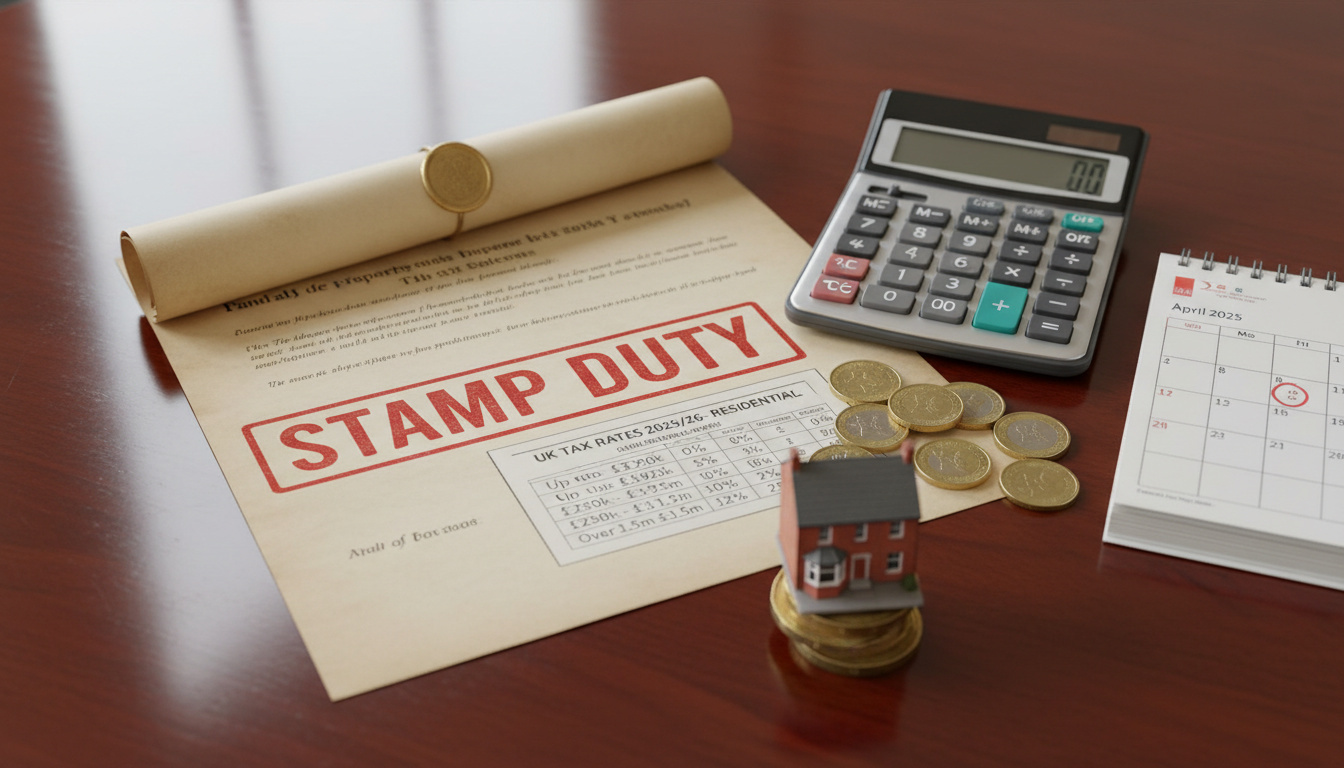
Stamp Duty Land Tax (SDLT) is a tax on land and property purchases in England and Northern Ireland, administered by HMRC. The amount payable depends on the property value, buyer status, and purchase date, with rates and thresholds varying significantly based on whether the buyer is a first-time purchaser, replacing a main residence, or acquiring additional properties.
Major changes took effect on 31 October 2024 and 1 April 2025, reverting temporary increases introduced in the September 2022 Autumn Budget. These adjustments tightened first-time buyer reliefs and increased surcharges for additional dwellings, directly impacting transaction costs across the housing market.
What is Stamp Duty?
Tax on residential and non-residential land purchases above specific value thresholds
Buyers of freehold and leasehold properties in England and Northern Ireland
£125,000 for standard residential purchases from 1 April 2025
Progressive bands ranging from 0% to 12%
SDLT applies to the legal transfer of land and buildings, with charges calculated on the portion of the purchase price falling within specific bands. The system operates progressively, meaning higher percentages apply only to amounts above each threshold rather than the entire transaction value.
- Threshold Reversion: The zero-rate band returned to £125,000 on 1 April 2025, concluding the temporary £250,000 concession.
- First-Time Buyer Contraction: Relief thresholds reduced from £425,000 to £300,000 for zero-rated purchases.
- Additional Property Surcharge: Increased to 5% on 31 October 2024, affecting second homes and buy-to-let investments.
- Corporate Liability: Non-natural persons face a 17% flat rate on residential acquisitions exceeding £500,000.
- Payment Window: Strict 14-day deadline following legal completion of the purchase.
- Geographic Limits: Scotland and Wales operate separate property tax regimes; SDLT applies only to England and Northern Ireland.
- Progressive Calculation: Successive rates apply solely to portions exceeding each band limit.
| Property Value Band | Standard Rate | Taxable Portion |
|---|---|---|
| Up to £125,000 | 0% | First £125,000 |
| £125,001 to £250,000 | 2% | Amount between £125,001 and £250,000 |
| £250,001 to £925,000 | 5% | Amount between £250,001 and £925,000 |
| £925,001 to £1.5 million | 10% | Amount between £925,001 and £1,500,000 |
| Over £1.5 million | 12% | Amount exceeding £1,500,000 |
| Example: £295,000 property | £4,750 total liability | |
What Are the Current Stamp Duty Rates and Thresholds?
From 1 April 2025, standard residential rates apply to most purchases of a main residence by individuals replacing their only home. The current HMRC schedule establishes progressive charges based on portions of the purchase price.
Standard Residential Bands
The standard rate structure operates on a tiered basis. No tax is due on the first £125,000 of the purchase price. The portion between £125,001 and £250,000 attracts 2%, while amounts between £250,001 and £925,000 fall into the 5% bracket. Higher value segments incur 10% up to £1.5 million, and 12% beyond that threshold.
First-Time Buyer Relief
Qualifying first-time buyers—those who have never owned a freehold or leasehold interest and who intend to occupy the dwelling as their main residence—access preferential rates on purchases up to £625,000. Knight Frank’s analysis confirms that for completions from 1 April 2025, the zero-rate threshold stands at £300,000, with 5% charged on the portion between £300,001 and £500,000. Properties exceeding £500,000 do not qualify for relief, attracting standard rates instead.
First-time buyer relief contracted significantly on 1 April 2025. The zero-rate band decreased from £425,000 to £300,000, while the maximum purchase price for any relief dropped from £625,000 to £500,000.
Additional Property Surcharge
Purchases of second homes, buy-to-let investments, or any dwelling that adds to an existing property portfolio attract a 5% surcharge atop standard rates. This rate increased from 3% on 31 October 2024 and applies even when replacing a main residence if the buyer retains another dwelling.
How Much Stamp Duty Will I Pay?
Calculating the exact liability requires applying the correct rate bands to each portion of the purchase price. The calculation differs substantially based on buyer status and property type.
Standard Purchase Calculation
For a property purchased at £295,000, the calculation runs as follows: zero percent on the first £125,000 (£0), two percent on the next £125,000 (£2,500), and five percent on the remaining £45,000 (£2,250). The total SDLT liability reaches £4,750.
Stamp duty is computed cumulatively. Only the amount falling within each specific band attracts that band’s rate, rather than applying the highest rate to the entire purchase price.
First-Time Buyer Scenarios
A first-time buyer purchasing at £499,999 pays nothing on the first £300,000, then 5% on the remaining £199,999, resulting in a total tax of £9,999.95. LB Law notes that purchases exceeding £500,000 forfeit all first-time buyer relief, reverting to standard rates.
Buy-to-Let and Corporate Rates
Investors face compounded rates. The buy-to-let structure applies 5% on properties up to £125,000, rising to 7% between £125,001 and £250,000, 10% up to £925,000, 15% to £1.5 million, and 17% beyond. Companies purchasing residential property over £500,000 encounter a flat 17% rate.
Who Pays Stamp Duty, When, and What Reliefs Apply?
The buyer bears legal responsibility for SDLT payment, though solicitors typically handle the actual submission and transfer of funds to HMRC.
Payment Deadlines
Tax becomes due within 14 days of completion—the point when legal ownership transfers and the transaction registers with the Land Registry. The NRLA highlights that failure to meet this deadline triggers penalties and interest charges.
HMRC requires SDLT returns and payment within 14 days of completion. Late submissions incur automatic penalties regardless of whether tax is owed. For those interested in the Dublin property market, you can find houses for sale in Ballyfermot, Dublin 10 at $irelandpressroom.net.
Available Reliefs and Exemptions
Beyond first-time buyer relief, main residence replacement qualifies for exemption from the additional property surcharge if the previous home sells within three years. Properties purchased below the zero-rate threshold incur no tax. Mixed-use properties and farms may qualify for non-residential rates, which follow different, typically lower, schedules.
Who Qualifies for Exemptions
No SDLT is due on properties transacted at or below £125,000 for standard buyers, or £300,000 for qualifying first-time buyers. Transfers between spouses or civil partners during divorce proceedings, and certain inherited properties, may also attract zero rates, though specific conditions apply.
How Has Stamp Duty Changed Over Time?
-
Autumn Budget introduced temporary thresholds: zero rate raised to £250,000 and first-time buyer relief to £425,000.
-
Additional property surcharge increased from 3% to 5%; corporate rate rose from 15% to 17% on purchases over £500,000.
-
Temporary thresholds expired. Standard zero-rate band returned to £125,000; first-time buyer relief reduced to £300,000 maximum zero-rate threshold.
These changes reflect the government’s phased withdrawal of pandemic-era stimulus measures. HMRC historical data tracks these transitions through official rate publications.
What Is Certain About Current Stamp Duty Rules?
| Established Rules | Uncertain or Changing Elements |
|---|---|
| Rates effective 1 April 2025 are fixed and published by HMRC | Future Budget announcements may alter thresholds beyond 2025 |
| 14-day payment deadline applies universally to all transactions | Potential future adjustments to first-time buyer eligibility criteria |
| 5% surcharge rate for additional properties confirmed | Scotland and Wales rates subject to separate devolved government decisions |
| England and Northern Ireland jurisdiction clearly defined | Specific leasehold calculations may require specialist valuation advice |
Why Does Stamp Duty Matter?
SDLT functions as a significant revenue stream for the Treasury, generating billions annually from property market activity. The tax influences housing affordability and transaction volumes, with threshold changes directly affecting buyer behavior and market liquidity.
The recent threshold reductions increase upfront costs for first-time buyers entering the market after April 2025, while elevated surcharge rates dampen investor appetite for second properties. These fiscal levers serve policy objectives of cooling speculative investment while ostensibly supporting first-time owner-occupiers, though the contraction of relief limits may offset these aims.
What Do Official Sources Say?
Stamp Duty Land Tax is charged on land and property transactions in England and Northern Ireland. The amount of tax you pay depends on the purchase price, whether you can claim any relief, and whether the property is residential or non-residential.
— HM Revenue & Customs
Clarion Solicitors emphasises that contract exchange dates determine applicable rates, particularly regarding the October 2024 surcharge transition, where contracts exchanged before 31 October but completing after retained the 3% rate.
What Should Buyers Remember About Stamp Duty?
From 1 April 2025, stamp duty thresholds have reverted to pre-2022 levels, with standard purchases attracting tax above £125,000 and first-time buyer relief capped at £300,000. The additional property surcharge now stands at 5%, while all payments remain due within 14 days of completion. Buyers should consult the Stamp Duty Land Tax (SDLT) rates from 1 April 2025 published by HMRC and the Complete guide to UK Stamp Duty Land Tax 2025 to calculate specific liabilities before exchanging contracts.
Frequently Asked Questions
How do I calculate stamp duty?
Calculate stamp duty by applying the relevant percentage to each portion of the purchase price falling within specific bands. For standard residential purchases from April 2025, pay 0% up to £125,000, 2% on the next £125,000, and 5% on amounts up to £925,000, with higher rates for subsequent bands.
Are there stamp duty exemptions?
Properties purchased below the zero-rate threshold incur no tax—£125,000 for standard buyers and £300,000 for qualifying first-time buyers. Additional exemptions apply to certain involuntary transactions, including property transfers between spouses or civil partners during divorce proceedings.
What happens if I don’t pay stamp duty?
HMRC imposes automatic penalties and interest charges for late payment. The 14-day deadline runs from completion date, and failure to submit a return or pay the tax triggers financial sanctions regardless of whether the liability itself is zero.
What is stamp duty relief?
Relief reduces or eliminates tax liability for specific buyer categories. First-time buyer relief offers zero rates up to £300,000 and reduced rates to £500,000. Main residence replacement relief exempts buyers from the 5% additional property surcharge when selling their previous home within three years.
Do first-time buyers pay stamp duty?
First-time buyers purchasing properties up to £300,000 pay no stamp duty. For purchases between £300,001 and £500,000, they pay 5% on the amount exceeding £300,000. Properties costing more than £500,000 do not qualify for relief and attract standard rates.

Thomas Grant leads fact-checking, source verification and corrections at Australia Watch.