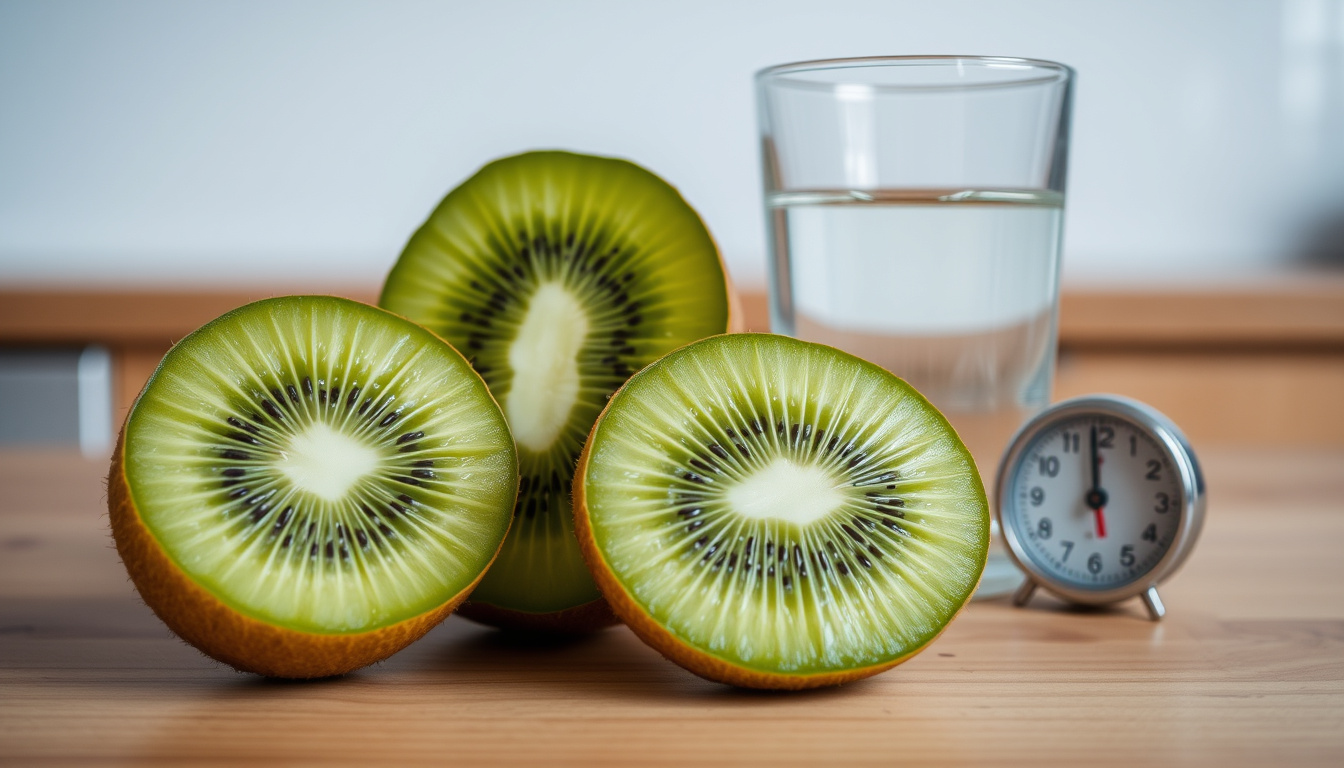
There’s a good reason kiwis have become a staple in fruit bowls around the world: they pack a surprising amount of nutrition into a small, fuzzy package. Few fruits can match the vitamin C content of a single kiwi, and emerging research points to benefits that go beyond immunity — from better digestion to deeper sleep. This guide takes a close look at what science says about eating kiwi daily, how it stacks up against other fruits, and the best time to enjoy one.
Vitamin C per 100g: 92.7 mg · Dietary fiber per 100g: 3.0 g · Potassium per 100g: 312 mg · Calories per 100g: 61 kcal · Glycemic index: 52 (low) · Daily recommended intake: 1–2 kiwis
Quick snapshot
- Kiwi is rich in vitamin C, fiber, and potassium (USDA FoodData Central)
- Regular consumption supports immune function and digestive health (PMC review: The nutritional and health attributes of kiwifruit)
- Low glycemic index (GI ~52) makes it suitable for diabetics in moderate amounts (Diabetes UK – Glycaemic Index and Diabetes)
- The exact dose of kiwi needed to significantly improve sleep quality is not firmly established (Harvard Health Publishing – Kiwi fruit may help with sleep)
- Long-term effects of eating multiple kiwis daily beyond 2 per day are not well studied (Harvard Health Publishing – Kiwi fruit may help with sleep)
- Interactions with specific medications, such as blood thinners, require more research (Harvard Health Publishing – Kiwi fruit may help with sleep)
- Kiwi season is year-round with peak availability in fall and winter (ScienceDirect – Kiwifruit agricultural overview)
- Origin: China; now commercially grown in New Zealand, Italy, Chile, and others (ScienceDirect – Kiwifruit agricultural overview)
- Further research expected on optimal kiwi dosage for sleep and drug interactions
- Growing consumer interest in gold kiwi varieties may drive more comparative studies
| Attribute | Value |
|---|---|
| Scientific name | Actinidia deliciosa (green) / Actinidia chinensis (gold) |
| Origin | China (now commercially grown in New Zealand, Italy, Chile, and others) |
| Key nutrient per 100g | Vitamin C: 92.7 mg (USDA) |
| Edible parts | Entire fruit (skin, flesh, seeds) except the fuzzy exterior is sometimes peeled |
| Season | Year-round with peak in fall/winter |
What are the benefits of eating a kiwi?
How does kiwi support the immune system?
- Kiwi is exceptionally high in vitamin C, surpassing oranges per gram. A 100 g serving provides 92.7 mg of vitamin C, covering over 80% of the daily recommended intake (USDA FoodData Central).
- The fruit also supplies vitamin E and polyphenols, which act as antioxidants to reduce oxidative stress (PMC review: The nutritional and health attributes of kiwifruit).
- UCLA Health notes that a serving of kiwifruit has more vitamin C than an orange and more potassium than a medium-sized banana (UCLA Health).
What are the digestive benefits of kiwi?
- Kiwi contains both soluble and insoluble dietary fiber (3.0 g per 100 g), which aids regularity and helps prevent constipation (Cleveland Clinic Health Essentials).
- The enzyme actinidin can help break down proteins and reduce bloating.
- Cleveland Clinic reports that kiwi can soften stool and speed movement through the colon, and the fruit is high in prebiotics that support beneficial gut microbes (Cleveland Clinic Health Essentials).
Eating more than two kiwis a day can cause digestive upset due to the high fiber and actinidin content — the same qualities that aid digestion can backfire in excess.
The pattern is clear: kiwi’s combination of vitamin C, fiber, and unique enzymes makes it a dual-action fruit — supporting immunity on one front and gut health on another.
How many kiwis should you eat a day?
What happens if I eat kiwi daily?
- General recommendation: 1–2 kiwis per day fits into a balanced diet (WebMD).
- Two kiwis provide more than the daily recommended intake of vitamin C for adults (over 100% of the DV).
- Daily consumption is linked to improved immune function and reduced constipation (Cleveland Clinic Health Essentials).
- Excessive intake (e.g., more than 4 per day) may cause digestive upset due to high fiber and actinidin.
What will eating 2 kiwi a day do?
- Two kiwis (about 140 g total) provide roughly 90 calories, 5 g of fiber, and 230% of the daily vitamin C target (WebMD).
- Zespri notes that two green kiwifruits have 90 calories, while two SunGold kiwifruits have 110 calories (Zespri US).
- Eating two kiwis daily is considered a practical and safe way to boost nutrient intake without overdoing sugar or calories.
For individuals with sensitive stomachs, even two kiwis may cause mild irritation because of the fruit’s acidity. Start with one and increase gradually.
The implication: 1–2 kiwis is the sweet spot — enough to get meaningful vitamin C and fiber, but low enough to avoid digestive trouble.
Is kiwi good for a diabetic patient?
How many kiwis a day can a diabetic eat?
- Kiwi has a low glycemic index (GI ~52) and a low glycemic load, meaning it does not spike blood sugar sharply (Diabetes UK).
- High fiber content (3.0 g per 100 g) slows sugar absorption, aiding blood glucose control.
- Diabetics can typically include 1–2 kiwis per day as part of a carbohydrate-controlled diet.
- Studies show regular kiwi consumption may improve glycemic markers and reduce oxidative stress in type 2 diabetes (PMC – Kiwifruit and metabolic health).
What is the glycemic index of kiwi?
- Both green and SunGold kiwifruit are low glycemic index foods (Zespri US).
- The GI of kiwi is around 52, which is considered low (under 55).
- Because of the fiber and low sugar density, kiwi is a better choice for diabetics compared to high-GI fruits like watermelon or ripe bananas.
Why this matters: For the millions managing type 2 diabetes, fruit choices are often restricted. Kiwi offers a sweet yet blood-sugar-friendly option that also delivers fiber and antioxidants.
What is healthier, a kiwi or an apple?
Which fruit has more vitamin C?
- Kiwi contains significantly more vitamin C (92.7 mg/100 g) than apple (4.6 mg/100 g) — about 20 times more (USDA).
- Kiwi also has more potassium (312 mg vs ~107 mg per 100 g) and slightly more fiber (3.0 g vs 2.4 g) (Healthline: Kiwi Benefits).
How do they compare in fiber and calories?
- Apples are lower in calories (52 vs 61 kcal per 100 g) and have slightly lower sugar content.
- Both fruits provide soluble fiber, but kiwi delivers more total fiber and the unique enzyme actinidin.
- Choice depends on individual nutritional goals: kiwi wins for vitamin C and potassium, apple wins for lower calorie density.
Five nutrients, one pattern: if you prioritize vitamin C and potassium, kiwi is the stronger pick; if you’re watching calorie intake, an apple is lighter.
| Nutrient (per 100 g) | Kiwi | Apple |
|---|---|---|
| Vitamin C | 92.7 mg | 4.6 mg |
| Dietary fiber | 3.0 g | 2.4 g |
| Potassium | 312 mg | ~107 mg |
| Calories | 61 kcal | 52 kcal |
| Glycemic index | 52 (low) | ~39 (low) |
The catch: while kiwi is more nutrient-dense, apples are cheaper, more portable, and less likely to cause oral allergy for people with birch pollen sensitivity.
Should I eat kiwi in the morning or night?
How does kiwi affect sleep and energy?
- Kiwi contains serotonin and antioxidants that may promote sleep when eaten 1 hour before bedtime (Harvard Health Publishing).
- Morning consumption provides a vitamin C boost and natural energy without a blood sugar spike, thanks to its low GI.
- Preliminary evidence suggests that eating kiwis at night can improve sleep onset and duration.
What not to mix with kiwi?
- Avoid mixing kiwi with dairy products (e.g., milk, yogurt) immediately before consumption, as the actinidin enzyme can break down milk proteins and cause a bitter taste.
- This reaction occurs quickly, so if you do want to add kiwi to a smoothie or yogurt, eat it right away or use a gold kiwi (which has less actinidin).
Kiwi’s very asset — its digestive enzyme — can ruin a dairy-based breakfast if you let it sit. Eat it fresh, pair it with non-dairy alternatives, or choose gold kiwi for a milder enzyme effect.
The trade-off: morning eaters get an energy lift without a crash; night eaters tap into sleep-promoting compounds. The best time depends on whether you prioritize alertness or rest — and whether dairy is part of your meal.
Upsides
- Exceptionally high in vitamin C and potassium
- Supports digestion and gut health
- Low GI suitable for diabetics
- May improve sleep quality
- Edible skin adds extra fiber
Downsides
- Acidity may irritate sensitive stomachs
- Actinidin can curdle dairy if not eaten immediately
- Higher sugar content than some berries
- Potential interaction with blood thinners (vitamin K)
- Fuzzy skin not to everyone’s taste
How to eat kiwi fruit: a step-by-step guide
- Choose ripe kiwis – look for fruit that yields slightly to gentle pressure. Avoid any with soft spots or wrinkles.
- Wash the skin – even if you plan to peel it, rinse under running water to remove dirt.
- Peel or don’t peel – the skin is edible and rich in fiber. If you prefer it peeled, cut off both ends and slide a spoon between the skin and flesh, then rotate.
- Slice or scoop – for slices, cut into rounds or wedges. Some people scoop the flesh out of the half fruit with a spoon.
- Enjoy immediately – kiwi is best eaten fresh. For a twist, add it to salads, smoothies, or yogurt (eat right away to avoid curdling).
Kiwi is one of the few fruits you can eat whole — no peeling required. For health-conscious consumers in the U.S., eating the skin boosts fiber intake by 50% compared to peeled fruit (USDA).
Confirmed facts and what remains unclear
Confirmed facts
- Kiwi is rich in vitamin C, fiber, and potassium.
- Regular consumption supports immune function and digestive health.
- Low GI makes it suitable for diabetics in moderate amounts.
- Both green and gold varieties are low in fat, sodium, and cholesterol.
- Kiwi contains more vitamin C than an orange and more potassium than a banana.
What’s unclear
- The exact dose of kiwi needed to significantly improve sleep quality is not firmly established.
- Long-term effects of eating multiple kiwis daily beyond 2 per day are not well studied.
- Interactions with specific medications (e.g., blood thinners) require more research.
Expert perspectives
“The benefits of kiwi fruit may include: Useful source of fibre, May support the immune system, May alleviate asthma.”
“Kiwifruit are exceptionally high in vitamin C and contain an array of other nutrients, notably nutritionally relevant levels of dietary fibre, potassium.”
— PMC review (Richardson et al., 2018)
“Kiwi is used for asthma, constipation, high blood pressure, and other conditions – based on traditional and preliminary research.”
For consumers who want to eat more nutrient-dense produce, the evidence is clear: kiwi is a practical, delicious way to hit daily vitamin C and fiber targets while also supporting sleep. The choice between green and gold comes down to taste and calorie preference, but both deliver a powerful nutritional punch.
For a comprehensive overview of kiwi fruit benefits and daily intake, including its role as a nighttime sleep aid, this guide offers expert-backed insights.
Frequently asked questions
Can kiwi help with weight loss?
Yes, due to its low calorie density (61 kcal per 100 g) and high fiber content, kiwi can increase satiety and help control appetite when eaten as part of a calorie-controlled diet.
Is kiwi skin edible?
Yes, the skin is completely edible and contains extra fiber and vitamin C. However, the fuzzy texture may not appeal to everyone. Rubbing it with a towel or gold kiwi (smoother skin) can help.
How to store kiwi fruit to keep it fresh?
Store unripe kiwis at room temperature away from direct sunlight. Once ripe, refrigerate them in a plastic bag for up to a week. Keep them away from ethylene-producing fruits like apples to avoid over-ripening.
What are the side effects of eating too much kiwi?
Excessive intake (more than 4 per day) can cause digestive upset, mouth irritation due to acidity, and potential interactions with blood-thinning medications because of the fruit’s vitamin K content.
Can kiwi be eaten during pregnancy?
Yes, kiwi is safe and beneficial during pregnancy due to its folate and vitamin C content. However, wash thoroughly and consult a healthcare provider if you have a history of oral allergies.
Does kiwi interact with blood thinners like warfarin?
Kiwi contains vitamin K (about 31 µg per fruit), which can affect blood clotting. If you take warfarin, maintain a consistent intake and discuss with your doctor.
How to ripen a kiwi quickly?
Place unripe kiwis in a paper bag with an apple or a banana at room temperature. The ethylene gas released speeds ripening within 1–2 days.
Are gold kiwis healthier than green kiwis?
Gold kiwis have more vitamin C and slightly more calories, while green kiwis have more fiber and a tangier taste. Both are low GI and support immune health.
For Australian consumers looking to boost their daily nutrient intake, the choice is clear: adding one or two kiwis to your routine delivers a measurable improvement in vitamin C status and digestive comfort, especially when eaten with the skin on.

Charlotte Foster covers culture, lifestyle and society across Australia for Australia Watch.