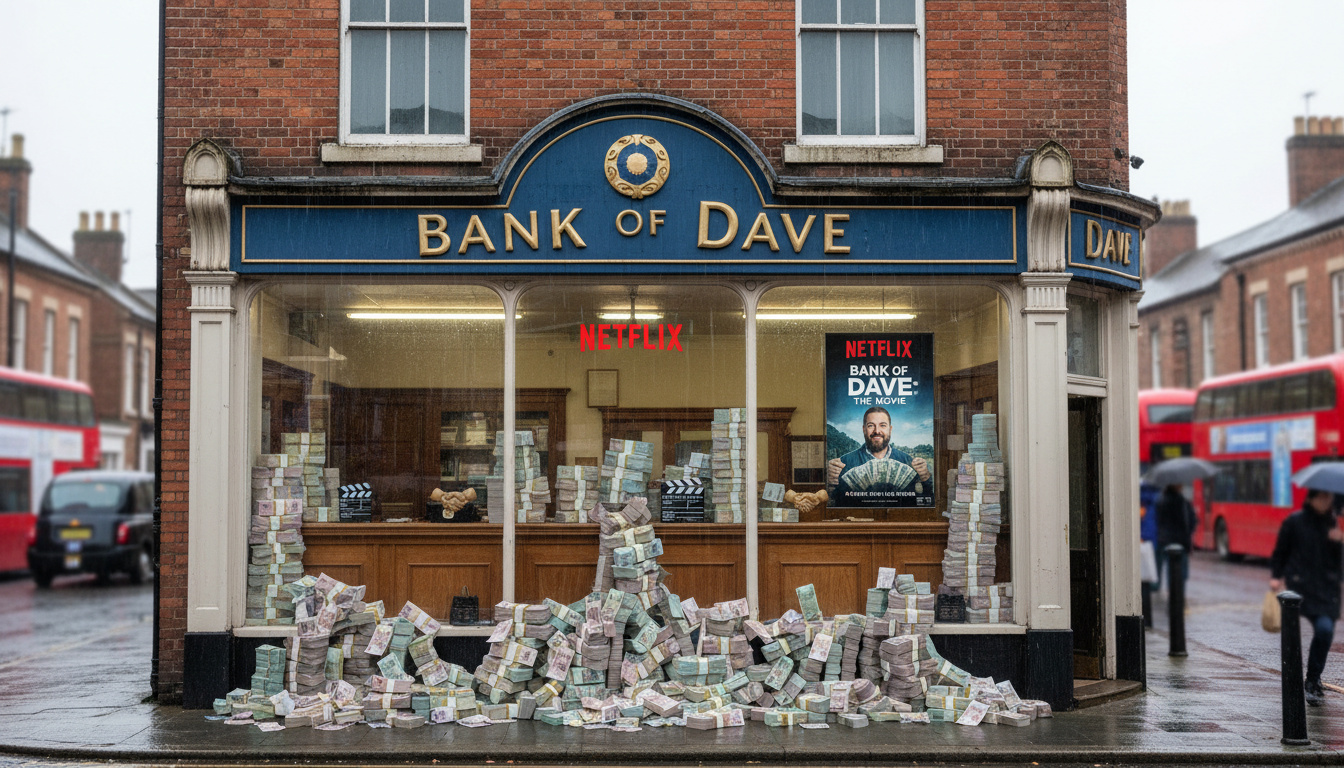
The Netflix phenomenon “Bank of Dave” has sparked widespread curiosity about whether a working-class entrepreneur from Lancashire actually beat the financial establishment. The films depict Dave Fishwick’s battle to create a community-focused alternative to high-street banking, but the reality involves regulatory constraints, legal terminology restrictions, and a business model that deliberately avoids the “bank” label despite the cinematic title.
While the streaming adaptation dramatizes certain victories, the true story of Burnley Savings and Loans reveals a peer-to-peer lending operation that has issued over £30 million to local borrowers without ever obtaining a formal banking license. Understanding what actually exists behind the narrative requires examining the regulatory landscape that governs UK financial services and the specific mission that drives Fishwick’s continued campaign against predatory lending practices.
Is Bank of Dave Real?
The entity known popularly as “Bank of Dave” does exist, though not under that precise legal designation. The organization operates officially as Burnley Savings and Loans, founded by Dave Fishwick in September 2011. According to Digital Spy, regulatory restrictions prevent Fishwick from using the word “bank” in an official capacity—a City expert warned him in 2012 that using terms like “deposit” or claiming bank status could result in imprisonment.
Key Facts at a Glance
- The institution is legally registered as Burnley Savings and Loans, not “Bank of Dave”
- It operates under a peer-to-peer crowdfunding model rather than as a regulated bank
- All profits are donated to local Burnley charities rather than distributed to shareholders
- Fishwick cannot legally use banking terminology due to UK regulatory restrictions
- The organization has issued over £30 million in loans to local businesses and families
- The Netflix adaptation fictionalizes the acquisition of a banking license that never actually occurred
- Fishwick continues actively campaigning for full UK banking regulation
Operational Snapshot
| Fact | Detail | Source |
|---|---|---|
| Official Name | Burnley Savings and Loans | Digital Spy |
| Founded | September 2011 | Digital Spy |
| Founder | Dave Fishwick | Burnley Savings and Loans |
| Location | Burnley, Lancashire | Digital Spy |
| Total Lent | Over £30 million | Digital Spy |
| Legal Status | Independent lending company (not a bank) | Digital Spy |
| Operating Model | Peer-to-peer crowdfunding | Digital Spy |
| Profit Distribution | Donated to local charities | Digital Spy |
| Slogan | “Bank on Dave!” | Digital Spy |
| Netflix Film | 2023 | Digital Spy |
| Sequel | Bank of Dave 2: The Loan Ranger (2025) | Digital Spy |
Who Is Dave Fishwick and What’s the True Story Behind Bank of Dave?
Dave Fishwick is a self-made millionaire from Burnley, Lancashire, who built his wealth through minibus sales before turning his attention to financial reform. According to the organization’s official history, Fishwick began lending his own money to customers when traditional banks stopped providing credit following the 2008 financial crisis.
Despite the “Bank of Dave” moniker used in media and film, Fishwick’s 2012 warning from financial authorities remains in effect: using the word “bank” or “deposit” in official communications could result in criminal prosecution. The organization has operated for over a decade within these constraints.
What Motivated the Founding?
The 2008 financial crisis created a lending freeze that disproportionately affected small businesses in former industrial towns like Burnley. Fishwick observed his minibus customers being rejected for loans despite having viable business models. The official website notes that this experience inspired him to establish a community-focused alternative to serve those abandoned by mainstream banking.
How Did the Netflix Connection Form?
Fishwick’s unconventional approach attracted documentary filmmakers before Netflix acquired the rights to dramatize his story. The 2023 film adaptation stars Rory Kinnear as Fishwick, with Hugh Bonneville and Joel Fry portraying composite characters based on real financial experts who assisted the venture. The sequel, released in 2025, shifts focus to Fishwick’s campaign against payday lending.
How Does Bank of Dave Work?
Burnley Savings and Loans operates through a peer-to-peer crowdfunding structure that connects local savers with borrowers. Savers deposit limited amounts which are then pooled and lent to individuals and businesses who repay the principal with interest. Unlike traditional banks, the organization does not operate under a banking license and cannot offer FSCS-protected deposits.
Where Is Bank of Dave Located?
The physical operation remains headquartered in Burnley, Lancashire, maintaining the community-focused approach that characterized its founding. The location in a former industrial town is central to its identity and mission.
Can You Join Bank of Dave?
Participation is limited by the organization’s legal structure. As a non-bank lending company, it cannot accept deposits in the traditional sense. Instead, savers effectively participate in a crowdfunding arrangement. The specific criteria for savers and borrowers depend on current regulatory allowances and the organization’s capacity. Those interested in similar community finance models should research What’s Open Good Friday 2025 – Stores, Banks, Services Hours to understand how alternative financial services operate within regulated calendars.
Bank of Dave Netflix Movie vs. Reality
The Netflix adaptation takes significant creative liberties with the true story, particularly regarding regulatory achievements. While the film suggests Fishwick secured the first banking license issued in 150 years, Digital Spy confirms that he has never obtained a full UK banking license and continues fighting for regulated status.
The lawyer character depicted by Joel Fry draws inspiration from Chris Moss, a financial solicitor at Myerson Solicitors who provided legal guidance during the organization’s establishment. Moss confirmed his advisory role in the early legal structuring of Burnley Savings and Loans.
The film’s climactic banking license victory is fictional. In reality, Fishwick remains unable to use the word “bank” in official marketing materials, and Burnley Savings and Loans operates as a peer-to-peer lender rather than a deposit-taking institution.
The Payday Loan Campaign
Bank of Dave 2: The Loan Ranger documents Fishwick’s real-world campaign against predatory payday lenders. Netflix describes the sequel as focusing on this advocacy work. Fishwick’s efforts contributed to regulatory changes that forced major payday lender Wonga to shut down operations, though he notes that similar companies continue operating.
What Is the Timeline of Bank of Dave’s Development?
- : Financial crisis hits Burnley; traditional banks restrict lending to small businesses — Digital Spy
- : Burnley Savings and Loans officially opens with “Bank on Dave!” slogan — Digital Spy
- : City expert warns Fishwick against using “bank” or “deposit” terminology under threat of imprisonment — Digital Spy
- : Netflix releases “Bank of Dave” film dramatizing Fishwick’s story — Digital Spy
- : Sequel “Bank of Dave 2: The Loan Ranger” released, focusing on payday loan campaign — Digital Spy
What Is Certain and Uncertain About Bank of Dave’s Status?
| Established Information | Uncertain or Developing |
|---|---|
| Burnley Savings and Loans is a legally operating entity | Whether full FCA banking regulation will be achieved |
| Dave Fishwick is a self-made millionaire who founded the organization | Fishwick’s exact current net worth (specific figures unavailable) |
| Over £30 million has been lent to local businesses and families | Current total number of active savers or borrowers |
| The payday loan campaign contributed to Wonga’s shutdown and regulatory changes | Specific timeline for achieving regulated bank status |
| The organization donates all profits to local charities | Whether the community bank model will expand nationally |
| Fishwick remains subject to legal restrictions on banking terminology | Specific FCA approval status for deposit-taking |
Why Did Dave Fishwick Start Burnley Savings and Loans?
The genesis of Burnley Savings and Loans lies in the systemic banking failures following the 2008 financial crisis. When major financial institutions withdrew credit from small businesses, Fishwick observed the immediate impact on his community. The contraction of traditional banking services created a vacuum that left legitimate borrowers without access to capital.
Fishwick’s model emerged as a direct response to this market failure. By creating a peer-to-peer system that kept money within the local economy, he sought to demonstrate that community-scale lending could operate ethically while serving those excluded from conventional finance. Understanding the broader UK financial landscape, including property taxation changes, provides context for how alternative lenders view economic shifts. Those examining What is Stamp Duty – UK Rates and Thresholds from April 2025 can see how regulatory changes affect financial accessibility across different sectors.
The organization continues highlighting modern banking closures, noting that 54 banks close monthly while 15,000 cash machines have disappeared, factors Fishwick argues drive vulnerable populations toward loan sharks.
What Have Key Figures Said About the Project?
“If I use the word deposit or say I’m a bank then I will go to prison.”
— Dave Fishwick, recounting 2012 legal warning
“I helped get Wonga shut down, we helped change the law, but these payday loan people, they’re still there.”
— Dave Fishwick, January 2025
“With Netflix, we’ve got this huge big light that we can shine on this industry and say, ‘This is wrong, this needs change.'”
— Dave Fishwick, on the impact of the films
What Should Viewers Know About Bank of Dave’s Reality?
Burnley Savings and Loans represents a functional alternative lending model, not a traditional bank. While the Netflix films capture Fishwick’s entrepreneurial spirit and community impact, they fictionalize the regulatory triumphs. The organization continues operating under the same legal constraints it faced at founding, unable to accept deposits or use banking terminology despite over £30 million in loans issued. Fishwick remains actively campaigning for full UK banking regulation while fighting payday lenders and highlighting the impact of What’s Open Good Friday 2025 – Stores, Banks, Services Hours and similar service reductions on financial exclusion.
Frequently Asked Questions
What is Dave Fishwick’s net worth from Bank of Dave?
While described as a self-made millionaire, specific figures regarding Fishwick’s current net worth are not publicly available. He built initial wealth through minibus sales before founding the lending organization.
How accurate is the Bank of Dave Netflix ending?
The film’s ending inaccurately suggests Fishwick obtained a full UK banking license. In reality, he continues operating under restrictions and has never received the license depicted in the cinematic conclusion.
Is Burnley Savings and Loans FCA regulated?
The organization operates as a peer-to-peer lending platform rather than a fully regulated bank. Fishwick continues actively campaigning for FCA banking regulation, but current status remains that of an independent lending company.
Can anyone use Bank of Dave services?
Participation is geographically focused on the Burnley area and subject to peer-to-peer lending regulations. Unlike traditional banks, it cannot offer deposit protection or standard banking services.
What happened to Wonga because of Bank of Dave?
Fishwick’s campaigning contributed to regulatory changes governing payday lending. Major lender Wonga shut down operations following these reforms, though Fishwick notes similar companies continue operating in the market.
What is the real name of the Bank of Dave?
The legal entity is called Burnley Savings and Loans. The “Bank of Dave” title exists only as media shorthand and the film title, as regulatory restrictions prevent official use of banking terminology.
Related stories





Liam O'Brien covers Australian politics and public affairs for Australia Watch.