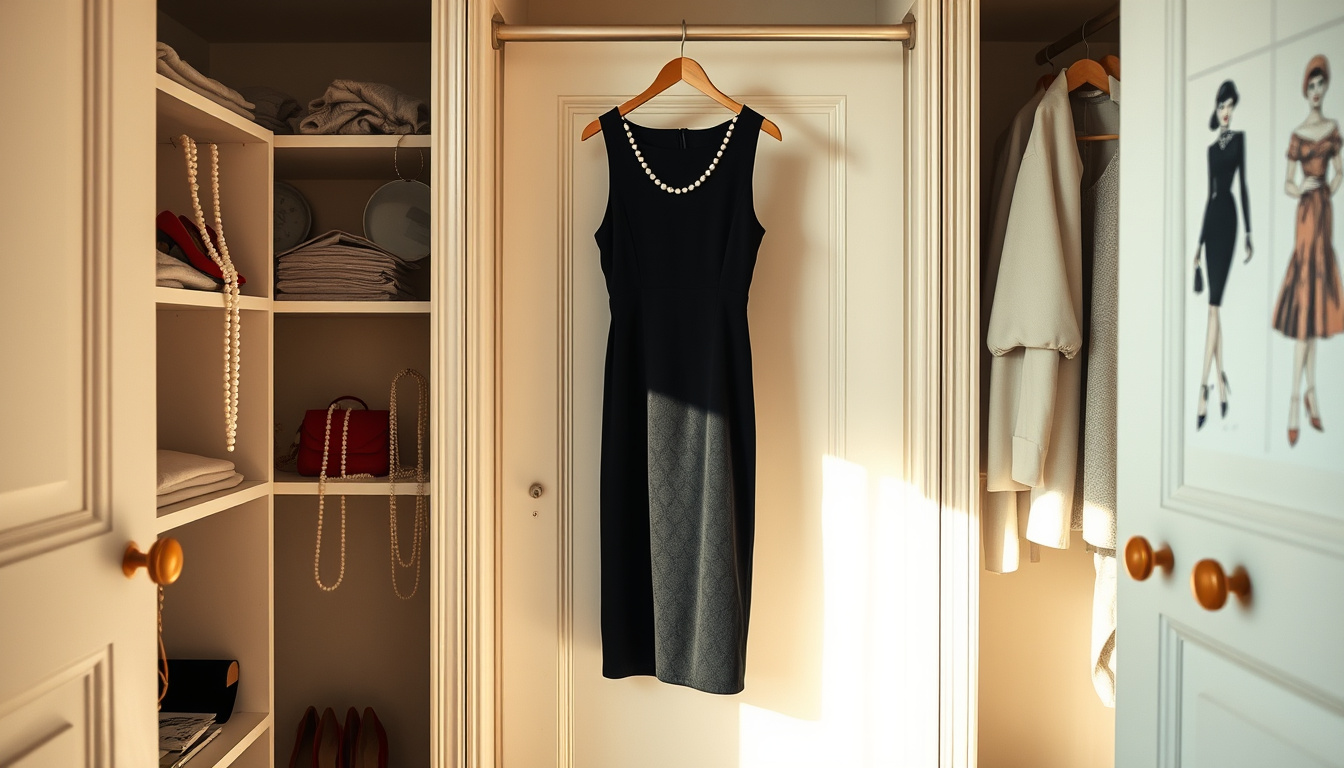

The Little Black Dress: Ultimate Guide to the LBD
The little black dress stands as one of fashion’s most enduring garments, a piece that has transcended nearly a century of style evolution to remain a wardrobe cornerstone for women worldwide. What began as a revolutionary concept in 1920s Paris continues to define elegance, versatility, and timeless sophistication in contemporary closets.
Coco Chanel introduced what would become known as the LBD in 1926, presenting a simple calf-length black crepe de chine sheath that immediately captured the attention of American Vogue. The publication dubbed it “Chanel’s Ford,” drawing a parallel between this accessible black dress and Henry Ford’s Model T automobile—both representing simplicity, practicality, and democratic design that transcended class boundaries.
Unlike the elaborate, ornamented gowns that dominated women’s fashion of earlier eras, Chanel’s creation offered something radical: a dress that prioritized cut and silhouette over decoration. This shift marked black’s transformation from a color associated primarily with mourning to a symbol of chic minimalism and feminine liberation.
What Is a Little Black Dress?
The little black dress, commonly abbreviated as LBD, refers to a simple, typically knee-length or midi black dress designed for versatility and elegance. Its defining characteristics include minimal ornamentation, a clean silhouette, and the ability to transition seamlessly across occasions from daytime business to evening events.
Key Insights About the LBD
- Chanel declared “I imposed black; it’s still going strong today, for black wipes out everything else around”
- Vogue predicted the dress would become “a sort of uniform for all women of taste”
- The LBD democratized elegant fashion by making sophistication accessible beyond the elite
- Black’s association shifted from mourning to modern chic through this garment
- The dress prioritizes cut and silhouette over elaborate decoration
- Its versatility allows wear from business meetings to cocktail events without更换 wardrobes
- The LBD remains in fashion nearly 100 years after its debut
Fast Facts
| Fact | Detail | Source |
|---|---|---|
| First Debut | 1926 in American Vogue | Wikipedia |
| Nickname Origin | “Uniform for modern woman” | Vogue |
| Length | Typically knee or midi | Metropolitan Museum |
| Materials | Crepe de chine, wool jersey, cotton voile, satin | 29 Secrets |
| Silhouette | Form-fitting, straight sheath | BandB Luxury |
| Original Price Context | Affordable ready-to-wear approach | Fashion History |
History and Origins of the Little Black Dress
Fashion historians credit Coco Chanel with establishing the foundation for what would become the little black dress, though black dresses existed earlier for formal occasions and by other designers. Chanel’s innovation lay not in creating black dresses from scratch, but in recontextualizing the color and simplifying the design to create something entirely new.
Chanel’s Revolutionary Approach
Chanel had been working with black garments since opening her Paris boutique in 1910. Historical records document a black velvet dress she created in 1912 for socialite Suzanne Orlandi, demonstrating her early comfort with the color. However, her 1926 design represented a decisive break from convention.
The designer reportedly despised the vibrant colors that dominated women’s fashion of her era. She championed black as a slimming, elegant choice that would flatter diverse body types. The 1926 creation—a short, straight, minimally decorated dress—appeared in Vogue’s October issue and immediately captured the fashion world’s imagination.
Other Designers and the Wider Movement
Following Chanel’s lead, other designers embraced black for daywear and evening occasions. Paul Poiret, Jean Patou, and Edward Molyneux introduced their own versions in the late 1920s and 1930s, helping to cement black’s place as a sophisticated choice rather than merely a mourning color.
Before the 1920s, wearing black outside of mourning contexts was virtually unthinkable for most women. Chanel’s repeated use of black in her designs helped normalize it as an elegant, everyday choice.
Iconic Figures and Popularization
The LBD gained traction as ready-to-wear fashion for afternoon and cocktail hours, rapidly adopted by American women across all social classes. The concept of an affordable, versatile black dress that could serve multiple purposes represented a democratization of elegant fashion.
Audrey Hepburn’s 1961 Givenchy gown in Breakfast at Tiffany’s became one of fashion’s most recognizable silhouettes. While not technically designed by Chanel, this dress exemplifies the LBD principle: simple, elegant, and immediately identifiable as chic. The style established during this era continues to influence evening wear today.
How to Style a Little Black Dress
The LBD’s greatest strength lies in its adaptability. A single dress can serve as a canvas for vastly different looks depending on accessories, layering, and context. Understanding how to style this garment for various occasions maximizes its value in any wardrobe.
Suitable Occasions
The little black dress suits an remarkable range of events:
- Cocktail parties and evening gatherings
- Business meetings and professional events
- Funerals and memorial services (reclaiming black’s original association)
- Date nights and romantic dinners
- Semi-formal events and galas
- Day-to-night transitions with appropriate accessories
The key to day-to-night versatility lies in accessories: minimal jewelry and flats work for daytime, while statement pieces and heels transform the same dress for evening events.
Accessories That Complement the LBD
Chanel herself modeled the original 1926 design with pearls, establishing an enduring association between the LBD and classic jewelry. String necklaces, pearl strands, and minimal pieces enhance elegance without competing with the dress.
Modern interpretations embrace bolder choices: dramatic earrings, statement necklaces, or vibrant handbags can inject personality into the neutral base. The dress also responds well to structural accessories—diagonal lines, geometric shapes, or simple adornments that echo its clean aesthetic.
Modern Styling Approaches
Contemporary takes on the LBD include diverse influences. Sporty menswear elements, oversized blazers, or unexpected layering creates tension between casual and formal. Alternatively, romantic touches like flounced skirts or delicate lace bring softness to the classic silhouette.
Footwear choices dramatically alter the dress’s personality: classic pumps convey timeless elegance, while ankle boots or sleek sneakers introduce contemporary edge. A leather jacket layered over the dress adds an attitude shift appropriate for nightlife or creative professional environments.
How to Choose the Perfect Little Black Dress
Selecting the right LBD involves balancing fit, fabric, and occasion. While the original Chanel design emphasized a form-fitting, straight silhouette, modern interpretations accommodate various body types and style preferences.
Fabric Considerations
Original Chanel designs utilized wool jersey, crepe de chine, cotton voile, and satin. Each fabric offers different qualities:
- Satin: Luxurious sheen suitable for evening events
- Crepe de chine: Soft drape with practical durability
- Wool jersey: Structure with comfort, ideal for transitional seasons
- Cotton voile: Lightweight option for summer or warmer climates
Silhouette and Fit
Chanel’s design hit mid-calf with no ornamentation, emphasizing simplicity that would flatter across figures. Contemporary LBDs range from body-conscious sheaths to A-line cuts and relaxed shifts. The most flattering options typically feature:
- Clean lines without excessive detailing
- Quality construction that holds shape
- Appropriate length for the wearer’s height
- Neckline that complements the body type
The LBD’s simplicity means fit becomes paramount. Even minor fitting issues stand out against the minimal design. Professional alterations often prove worthwhile investment for a garment designed to last years.
Modern Variations and Contemporary Updates
Karl Lagerfeld’s reinterpretations for Chanel introduced new materials and attitudes. His 1987–88 version in black vinyl and polyester jersey added contemporary edge while maintaining the dropped-waist, knee-length proportions of the original. These variations demonstrate how the LBD adapts to different eras while retaining its core identity.
Modern brands continue exploring the LBD concept, from high-street retailers offering affordable versions to luxury houses producing investment pieces. The silhouette persists because it provides a foundation for personal expression rather than dictating a single aesthetic.
The Little Black Dress Through the Decades
The LBD’s journey across the twentieth and twenty-first centuries demonstrates its remarkable adaptability. Each era has interpreted this garment through its own fashion lens while respecting its fundamental principles.
- 1926: Coco Chanel introduces the revolutionary LBD in American Vogue
- 1930s: Designers like Paul Poiret and Jean Patou adopt black for formal occasions
- 1961: Audrey Hepburn’s Givenchy gown in Breakfast at Tiffany’s cements the LBD in popular culture
- 1980s: Karl Lagerfeld reimagines the LBD for Chanel with contemporary materials
- 1990s: Princess Diana and other figures champion elegant black dresses for public appearances
- 2000s: The LBD becomes a pop culture touchstone, referenced in films and music
- 2010s: Sustainable fashion movements highlight the LBD as an ethical wardrobe investment
- 2020s: Contemporary designers continue honoring the silhouette while exploring eco-friendly materials
What We Know and What Remains Unclear
Established Information
- Chanel introduced her version of the LBD in 1926
- American Vogue featured the design and gave it the “Chanel’s Ford” nickname
- The dress was a calf-length black crepe de chine sheath
- Chanel had worked with black garments since her 1910 boutique opening
- The design prioritized cut over decoration
- Vogue predicted it would become “a uniform for all women of taste”
Aspects That Remain Unclear
- The precise date of the dress’s debut within 1926
- Specific sales figures from the early years
- Whether Chanel explicitly intended to create a “wardrobe essential”
- Exact details about early production quantities
- The complete history of who wore early versions beyond named examples
Fashion history often lacks complete documentation from earlier eras. While Chanel’s role as innovator is well-established, precise details about design evolution and early adoption patterns remain subject to ongoing scholarly investigation.
The Cultural Significance of the LBD
The little black dress transcended its function as mere clothing to become a symbol of broader social shifts. Chanel’s design arrived during a period when women’s roles were evolving, and fashion served as visible expression of these changes.
The LBD represented feminine liberation in multiple senses. Its simplicity freed women from corsets and elaborate undergarments. Its affordability—revolutionary for such elegant design—democratized sophistication. The dress’s ability to transition across contexts meant women could own fewer garments that served more purposes.
Vogue’s “Ford” moniker underscored this democratic ambition. Just as the Model T brought automotive transportation to the masses, the LBD brought high fashion within reach of ordinary women. The parallel suggested that elegance need not require extreme expense or elaborate maintenance.
What Experts and Designers Have Said
“I imposed black; it’s still going strong today, for black wipes out everything else around.”
— Coco Chanel, fashion designer
“A sort of uniform for all women of taste.”
— American Vogue, October 1926, predicting the LBD’s future impact
Fashion historians and industry publications have consistently cited the LBD as one of the most influential garments in modern history. The Metropolitan Museum of Art maintains examples of Chanel’s work in its permanent collection, recognizing the design’s cultural significance.
The Enduring Appeal of the Little Black Dress
Nearly a century after its introduction, the little black dress remains a wardrobe essential. Its endurance stems from Chanel’s original insight: simplicity, versatility, and elegant design need not require complexity or expense. The LBD adapts to changing fashion while maintaining its core identity.
Those seeking to plan respectful memorial services might find guidance from resources on Funeral Planners Near Me – Guide to Services and Costs, where black’s traditional association with mourning continues to hold meaning alongside its modern identity as a symbol of chic sophistication.
For those exploring complementary wardrobe elements, Stronger With You Absolutely – Rum Vanilla Fragrance Guide offers insights into building a cohesive personal style that pairs with classic wardrobe pieces.
Frequently Asked Questions
What occasions are appropriate for a little black dress?
The LBD suits cocktail parties, business meetings, evening events, semi-formal gatherings, and even funerals where black’s traditional association remains meaningful. Its versatility makes it suitable for day-to-night transitions with accessory changes.
Is the little black dress still in fashion?
The LBD remains relevant nearly 100 years after its introduction. Contemporary designers continue producing variations, and fashion publications regularly feature the dress as a timeless wardrobe investment rather than a seasonal trend.
What accessories pair well with a little black dress?
Classic choices include pearls, string necklaces, and minimal jewelry. Heels, clutches, and statement accessories elevate the dress for evening events. Bold jewelry or structural handbags add personality without overwhelming the simple silhouette.
How should a little black dress fit?
The LBD should feature clean lines, quality construction, and appropriate length for your height. The original design emphasized a form-fitting straight silhouette, though modern interpretations accommodate various body types. Professional alterations often prove worthwhile for this minimal garment.
Who invented the little black dress?
Coco Chanel is credited with introducing the modern LBD in 1926, though black dresses existed earlier for formal occasions. Her innovation lay in recontextualizing black as a chic choice and simplifying the design to prioritize cut over decoration.
What fabrics work best for an LBD?
Original Chanel designs used crepe de chine, wool jersey, cotton voile, and satin. Satin offers a luxurious sheen for evening wear, while crepe de chine provides practical durability. Wool jersey works well for transitional seasons.
Why is the little black dress considered iconic?
The LBD represents a wardrobe essential due to its affordability, versatility, and class-transcending appeal. It revolutionized fashion by prioritizing cut over elaboration and transforming black from a mourning color into a symbol of chic minimalism.
Related stories





Liam O'Brien covers Australian politics and public affairs for Australia Watch.