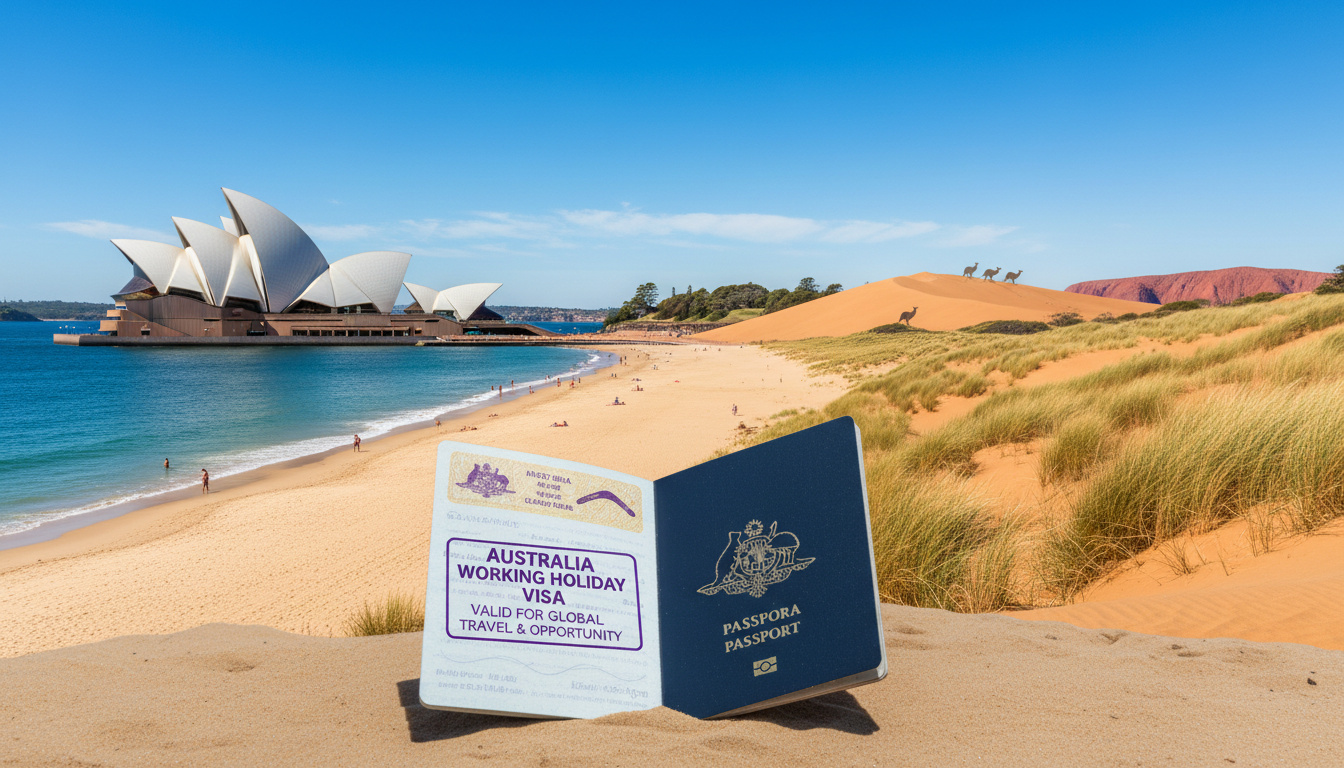
Australia’s Working Holiday Visa program offers young travelers the opportunity to combine short-term employment with extended travel across the continent. Two distinct visa subclasses—417 and 462—enable eligible passport holders to stay for up to 12 months initially, with pathways to extend for a second or third year through regional work commitments.
The scheme attracts thousands of applicants annually seeking to fund their travels through casual work in sectors ranging from agriculture to hospitality. While both visas share similar core conditions, they differ significantly in eligibility criteria, with Subclass 462 imposing additional education and English language requirements on applicants from specific nations.
Understanding the distinction between these streams, the financial prerequisites, and the specified work requirements for extensions proves essential for prospective applicants. The following guide examines the official requirements, application procedures, and conditions governing Australia’s working holiday arrangements.
Who Is Eligible for a Working Holiday Visa in Australia?
Key Eligibility Points
- Nationality determines whether you apply for Subclass 417 or 462, with distinct country lists for each stream.
- Subclass 417 permits applicants from Canada, France, Ireland, and the UK to apply up to age 35; all others must be 18–30.
- Subclass 462 requires post-secondary education and functional English proficiency for most nationalities.
- Applicants must demonstrate approximately AUD 5,000 in available funds plus costs for return or onward travel.
- First-time Subclass 462 applicants must lodge their application from outside Australia and cannot have previously entered on either a 417 or 462 visa.
- No dependent children may accompany the visa holder.
- Health examinations and police certificates may be required depending on individual circumstances.
| Criteria | Requirement |
|---|---|
| Maximum stay per employer | 6 months (exceptions apply for specific sectors) |
| Study allowance | Up to 4 months (17 weeks) |
| Travel flexibility | Multiple entries permitted |
| Funds proof | AUD 5,000 minimum plus return travel costs |
| Age range (most countries) | 18–30 years inclusive |
| Age range (Canada, France, Ireland, UK) | 18–35 years inclusive (Subclass 417 only) |
| Education requirement | Post-secondary qualification (Subclass 462 only) |
| English requirement | Functional English via test or education (Subclass 462 only) |
How to Apply for a Working Holiday Visa Australia
Document Preparation and Country-Specific Rules
Before initiating the application, candidates must verify their country’s specific arrangements. Nationals from China, India, and Vietnam face annual caps and ballot systems for Subclass 462, while citizens of Ecuador, Greece, Indonesia, Peru, and Thailand require a government letter of support. Pathway to Aus maintains updated information regarding these nationality-specific variations.
Required documentation includes a valid passport, evidence of sufficient funds (bank statements showing AUD 5,000 or more), and documentation for return or onward travel. Subclass 462 applicants must additionally provide proof of post-secondary education and English language proficiency through recognized tests such as IELTS, PTE, TOEFL, or Cambridge, or evidence of English-medium instruction.
For countries subject to annual caps and ballots (including China, India, and Vietnam), applicants must monitor the Department of Home Affairs announcements regarding opening dates and ballot registration periods. Securing a place in the ballot precedes the formal visa application.
Online Submission via ImmiAccount
All first-time applications must be submitted online through the Department of Home Affairs’ ImmiAccount portal. The system requires applicants to create an account, complete the relevant visa subclass form, upload supporting documents, and pay the application fee. Official guidance from Home Affairs confirms that first Subclass 462 applicants must be outside Australia when applying and when the visa is granted.
Processing and Health Examinations
Following submission, processing times vary based on individual circumstances and application volumes. The department may request health examinations or police certificates to satisfy character requirements. Aussizz Group advises arranging health checks promptly if requested, as delays in medical clearance can extend processing periods.
Key Details and Conditions of the WHV Australia
Visa Duration and Extension Pathways
Both subclasses permit an initial stay of 12 months from the date of first entry. Visa holders may leave and re-enter Australia multiple times during this period. Those seeking to extend their stay may apply for a second and third working holiday visa, potentially accumulating up to three years total in Australia, provided they complete specified work in regional areas.
Second visa eligibility requires three months of specified work undertaken on or after 18 November 2016, while third visa applications demand six months of specified work. StudyCo notes that this work must occur in approved industries within designated regional postcodes, with rules subject to periodic updates.
While the standard condition restricts employment with any single employer to six months, exemptions exist for work in agriculture, tourism and hospitality in northern Australia, and aged care. These exceptions facilitate labor mobility in sectors experiencing chronic workforce shortages.
Financial and Health Requirements
Applicants must demonstrate sufficient funds to support themselves during initial job searches, with This Is Australia indicating approximately AUD 5,000 as the baseline requirement. While the research does not indicate mandatory private health insurance, applicants must meet health standards through examinations if requested by Immigration officials. Global Work and Travel recommends maintaining adequate health coverage throughout the stay given Australia’s healthcare cost structure.
Jobs and Work Rules on a Working Holiday Visa Australia
Standard Employment Conditions
Visa holders may undertake any type of work, provided they do not remain with one employer for longer than six months unless an exemption applies. The visa permits study for up to four months, allowing travelers to undertake short courses during their stay. This flexibility supports the program’s primary purpose as a holiday with incidental employment rather than a dedicated work visa.
Specified Work for Visa Extensions
To qualify for second or third visas, applicants must complete specified work in designated regional areas. Eligible industries include plant and animal cultivation, fishing and pearling, tree farming and felling, bushfire recovery, construction, mining, and tourism and hospitality specifically within northern Australia. Aussizz Group emphasizes that the work must occur within specific postcodes classified as regional or northern Australia, with these designated areas subject to regular governmental review.
Specified work performed outside designated regional postcodes does not count toward visa extension requirements. Employers must operate within approved geographical areas, and visa holders should verify postcode eligibility before commencing employment intended to satisfy extension criteria.
For travelers planning their journey, understanding Frequent Flyer Program – Best 2025 Guide and Rankings can help maximize travel benefits while working regionally.
What Is the Application Timeline?
-
Verify eligibility, check country-specific caps or ballot requirements, and gather documentation including passport, funds proof, and qualifications (for Subclass 462). Source: Pathway to Aus
-
Create ImmiAccount and submit online application from outside Australia, paying the required fee. Source: Department of Home Affairs
-
Await decision; complete health examinations or provide police certificates if requested by case officers.
-
Receive visa grant notification; must enter Australia within 12 months of grant (for first visas).
-
Begin 12-month stay, working and traveling; maintain compliance with 6-month employer rule.
-
If seeking extension, complete 3 months specified work in regional Australia (for second visa) or 6 months (for third visa). Source: Tourism Australia
-
Apply for subsequent visas while holding or having held a previous 417 or 462 visa, remaining under the age limit (31 or 36 depending on nationality).
What Is Definite and What Remains Variable?
- Age limits: 18–30 for most; 18–35 for Canadian, French, Irish, and UK citizens on Subclass 417
- Funds requirement: Minimum AUD 5,000 plus return travel costs
- Work limitation: 6 months per employer (with specific sector exemptions)
- Application method: Online via ImmiAccount for first visas
- Extension requirement: 3 months specified work for second visa, 6 months for third
- Eligible countries: Defined lists for Subclass 417 and 462 respectively
- Application location: Outside Australia for first Subclass 462 visas
- Exact visa application fees: Current fee schedules not specified in available documentation
- Processing timeframes: Vary significantly by application volume and individual circumstances
- 2025/2026 ballot availability: Annual caps for China, India, and Vietnam subject to allocation announcements
- Specific regional postcode updates: Designated areas for specified work change periodically
- Health examination requirements: Determined on a case-by-case basis by immigration officials
Why Does the Program Exist?
Australia introduced working holiday arrangements in 1975 to foster cultural exchange and closer ties with partner nations while addressing seasonal labor shortages. The program evolved substantially with the introduction of the second and third visa extensions in 2005 and subsequent years, specifically designed to channel young workers toward regional and rural areas suffering from workforce deficits.
The scheme now functions as a critical component of the agricultural and tourism sectors’ labor supply chains, particularly in remote regions where local recruitment proves challenging. By requiring specified work in these areas for visa extensions, the policy effectively distributes temporary labor across the continent while offering young travelers extended exploration opportunities. For those seeking unique accommodation experiences during their travels, The Lodge Wadjemup – Heritage Accommodation Guide provides insights into distinctive Australian stays.
The program’s structure reflects a balance between immigration control and economic necessity, maintaining strict eligibility criteria while permitting the flexibility necessary for genuine holiday-making combined with incidental employment.
Official Sources and Legislative Basis
The Working Holiday visa (subclass 417) and Work and Holiday visa (subclass 462) allow young people to holiday in Australia and work to support themselves during their stay. Applicants must meet age, health, and character requirements, and hold a valid passport from an eligible country.
Department of Home Affairs, Official Visa Listing
To apply for a second or third Working Holiday visa, you must have completed specified work in regional Australia. For the second visa, you need 3 months of specified work; for the third visa, you need 6 months of specified work.
Department of Home Affairs, Subclass 462 Guidelines
Essential Points to Remember
Australia’s Working Holiday Visa program offers two distinct pathways—Subclass 417 and 462—each with specific eligibility criteria tied to nationality, age, and qualifications. Successful applicants receive 12 months of stay rights, with the potential to extend to three years through specified regional work in agriculture, construction, or northern tourism. The application demands proof of AUD 5,000 in funds, compliance with health and character standards, and online submission through ImmiAccount. Candidates should verify current country-specific caps and regional work designations through official Home Affairs channels before applying.
Common Questions
What is a working holiday visa Australia?
A temporary visa allowing young travelers to holiday in Australia while undertaking short-term work to fund their travels. Two subclasses exist: 417 (Working Holiday) and 462 (Work and Holiday), each with distinct country eligibility lists.
How long is working holiday visa Australia valid?
Initially 12 months from first entry. Holders may apply for a second and third visa, potentially staying up to three years total, provided they complete specified work requirements in regional Australia.
Can I study on a working holiday visa?
Yes, visa holders may study for up to four months (17 weeks) during their 12-month stay. Longer courses require a student visa.
Do I need private health insurance?
While not explicitly mandated in the requirements, applicants must pass health examinations if requested. Private health insurance is recommended to cover medical costs not included in Australia’s public health system.
Can I bring my partner or children?
No. Working holiday visa holders cannot include dependent children in their application. Partners must qualify and apply separately for their own visas.
What happens if I work longer than 6 months for one employer?
Unless working in exempt sectors (agriculture, northern tourism, aged care), exceeding the 6-month limit with one employer violates visa conditions and may affect future visa applications or result in cancellation.
How do I prove sufficient funds?
Provide recent bank statements showing available funds of at least AUD 5,000 plus the cost of a return or onward flight from Australia. Evidence may include bank statements, credit card limits, or certified financial documents.
What is specified work?
Work in approved industries (farming, fishing, construction, mining, bushfire recovery, or northern tourism/hospitality) performed within designated regional postcodes. This work qualifies toward second and third visa applications.
Related stories





Liam O'Brien covers Australian politics and public affairs for Australia Watch.