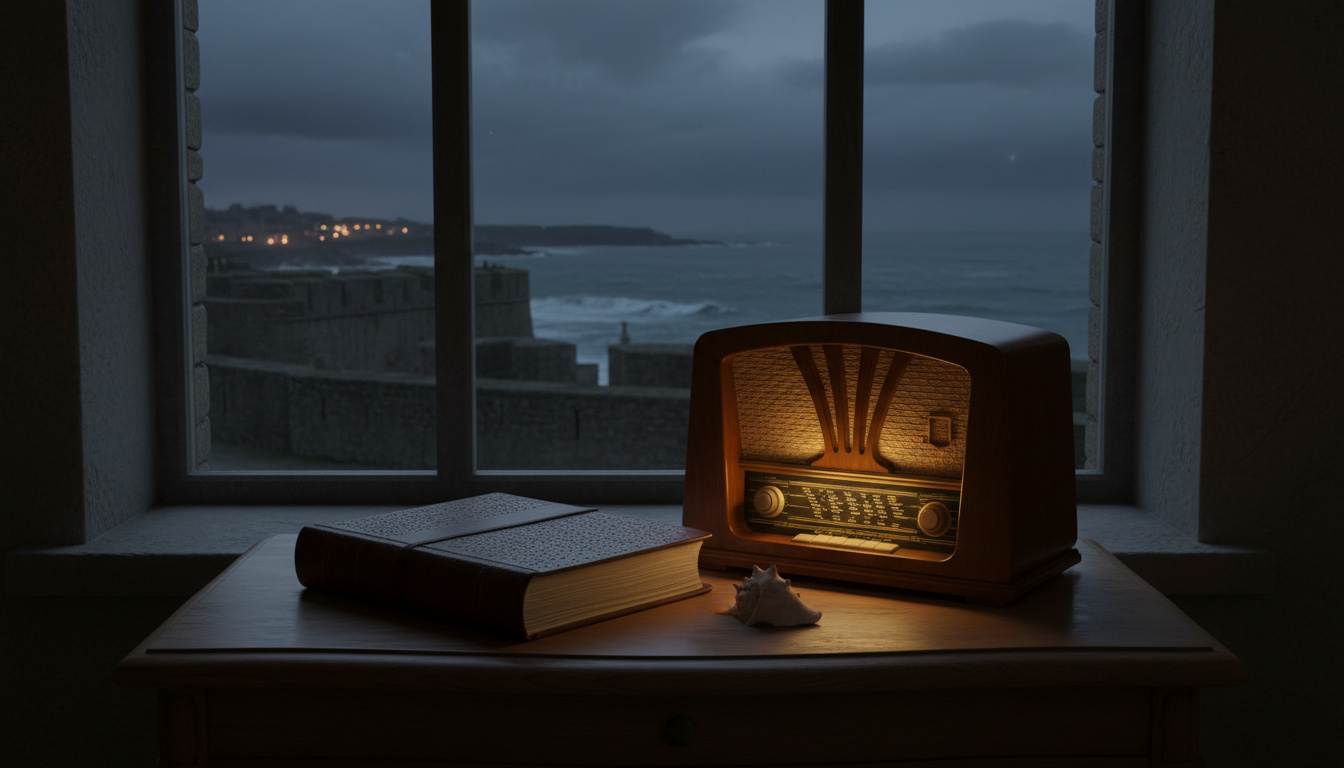
Anthony Doerr’s Pulitzer Prize-winning novel All the Light We Cannot See has captivated millions since its 2014 publication, weaving together the lives of a blind French girl and a German orphan during World War II. The narrative explores themes of human connection, moral choice, and the invisible forces that sustain hope amid the darkness of occupation and war.
The 2023 Netflix limited series adaptation brought renewed attention to the story, though significant departures from the source material sparked discussion among readers and viewers regarding character fates and narrative agency. Both versions use the siege of Saint-Malo as a backdrop for examining how individuals navigate impossible choices during historical atrocities.
This comprehensive guide examines the plot, characters, historical context, and key differences between the literary and screen adaptations.
What Is All the Light We Cannot See About?
The novel follows two parallel narratives that converge during the Allied liberation of Saint-Malo in August 1944. Marie-Laure LeBlanc, a blind French teenager, flees Paris with her father Daniel, a locksmith for the Museum of Natural History who carries a legendary diamond known as the “Sea of Flames.” They seek refuge with her great-uncle Etienne, a reclusive broadcaster who transmits resistance messages from his attic.
Werner Pfennig, a German orphan with a talent for radio engineering, becomes entangled with the Nazi regime through a brutal military school. His assignment to track resistance broadcasts leads him to Saint-Malo, where his moral compass confronts the reality of the occupation. SparkNotes details how their stories intersect around the hidden diamond and Etienne’s radio transmissions.
- Interwoven narratives follow two teenagers during the WWII occupation of France
- Radio technology serves as central metaphor for invisible human connection
- The “Sea of Flames” diamond drives the central conflict and symbolizes obsession
- Set during the historical Battle of Saint-Malo in August 1944
- Explores moral complexity within both Allied and Axis contexts
- Blind protagonist navigates occupied territory using tactile models and memory
- Pulitzer recognition cemented its status as significant contemporary literary fiction
| Aspect | Details |
|---|---|
| Genre | Historical fiction |
| Setting | WWII France and Germany (1934–1944) |
| Protagonists | Marie-Laure LeBlanc, Werner Pfennig |
| Length | Book: 530 pages; Series: 4 episodes |
| Point of View | Third-person limited, alternating perspectives |
| Publisher | Scribner (Simon & Schuster) |
Is All the Light We Cannot See Based on a True Story?
All the Light We Cannot See is explicitly historical fiction, not a true story. While the novel authentically depicts the atmosphere of occupied France and the brutal realities of German prison camps, the central characters and the diamond plot are entirely fictional creations. Wikipedia confirms the work’s status as a novel rather than historical record.
Historical Context
The narrative anchors itself to the Battle of Saint-Malo, a real military engagement that occurred in August 1944 during the Allied liberation of occupied France. German forces held the walled city in Brittany for weeks under heavy bombardment, resulting in significant destruction of the historic port town. The novel accurately reflects the tactical situation, the presence of German fortifications, and the eventual American-led liberation.
Fiction Versus Historical Record
Daniel, Marie-Laure, Werner, and the Nazi gemologist von Rumpel exist only within Doerr’s imagination. The “Sea of Flames” diamond and its associated curse constitute fictional devices rather than historical artifacts. However, the author grounded the narrative in extensive research regarding radio technology, mining operations, and the specific geography of Saint-Malo.
While the Battle of Saint-Malo occurred as described, the specific characters and the diamond legend are entirely fictional. The novel prioritizes emotional truth and moral complexity over documentary realism.
What Is the Ending of All the Light We Cannot See?
The conclusions diverge significantly between the novel and the Netflix adaptation, particularly regarding character survival and agency. Understanding these differences requires examining how each medium resolves the central conflicts.
The Book’s Conclusion
In Doerr’s original narrative, Werner locates Marie-Laure during the siege and kills von Rumpel when the Nazi officer threatens her. After helping her escape the burning city, Marie-Laure hides the diamond in a grotto and gives Werner the key. SparkNotes summarizes that Werner subsequently surrenders to Allied forces but dies when he accidentally steps on a landmine while imprisoned. Marie-Laure survives to reunite with Etienne in Paris, eventually becoming a scientist.
Werner’s death from a landmine represents the random cruelty of war, while Marie-Laure’s survival and reunion with Etienne offer a fragile sense of continuity and hope amid trauma.
The Netflix Series Finale
The adaptation significantly alters the climax. Collider reports that Marie-Laure herself shoots von Rumpel in the head after he detonates a hand grenade near her, a decisive shift in agency. Rather than dying, Werner chooses to surrender to American soldiers to ensure both his survival and Marie-Laure’s protection, promising to listen for her broadcasts after the war.
The series transforms Marie-Laure from a protected figure into an active protagonist who defeats the antagonist directly, while sparing Werner from the novel’s fatal conclusion.
Unlike the novel where Werner keeps the key to the diamond’s location, the series depicts Marie-Laure retrieving the Sea of Flames and throwing it into the ocean, completing her character arc independently.
How Does the Netflix Adaptation Compare to the Book?
Shawn Levy and Steven Knight’s adaptation condenses the novel’s decade-spanning narrative into four episodes, necessitating significant structural changes. Netflix streams the limited series globally, drawing both praise for its visual atmosphere and criticism for its pacing.
Character Development Changes
The series amplifies Marie-Laure’s role in the climax, allowing her to defeat von Rumpel directly rather than serving as a protected figure. Werner’s internal conflict receives less psychological depth due to time constraints, though his connection to Etienne’s broadcasts remains central.
The Diamond’s Fate
Both versions conclude with the Sea of Flames returning to the ocean, symbolizing the rejection of material obsession. However, the series shows Marie-Laure completing this act herself at her father’s beach, whereas the novel leaves Werner holding the key until his death.
Visual Storytelling Versus Literary Interiority
The novel’s strength lies in its intricate prose describing how Marie-Laure perceives the world through non-visual senses. The adaptation attempts to translate this through sound design and cinematography, though some critics argue the visual medium cannot fully replicate the book’s tactile richness.
Who Wrote All the Light We Cannot See and What Awards Did It Win?
Anthony Doerr spent ten years crafting the novel, conducting extensive research into radio technology, gemology, and the specific history of Saint-Malo. The book represents his fourth major work of fiction.
The novel won the Pulitzer Prize for Fiction in 2015, cementing its status as a significant work of contemporary American literature. The citation praised Doerr’s “imaginative and intricate” narrative construction and his ability to illuminate “how the human spirit persists against crushing odds.”
When Did All the Light We Cannot See Come Out?
- : Scribner publishes the novel to critical acclaim
- : Anthony Doerr wins the Pulitzer Prize for Fiction
- : Netflix announces the limited series adaptation with Shawn Levy producing
- : The four-episode series premieres globally on Netflix
The decade between publication and adaptation allowed the novel to establish itself as a staple of contemporary historical fiction curricula and book clubs before reaching streaming audiences.
What Facts Are Verified and What Remains Uncertain?
| Established Information | Information That Remains Unclear |
|---|---|
| Pulitzer Prize winner (2015) | Specific historical inspiration for Werner’s character |
| Historical fiction genre (not memoir) | Exact accuracy of German radio school protocols |
| Battle of Saint-Malo occurred August 1944 | Specific muse for the Sea of Flames legend |
| Author Anthony Doerr wrote original text | Whether Etienne’s broadcast techniques match historical resistance methods |
Why Is the Title All the Light We Cannot See Significant?
The phrase originates from a lesson taught by Etienne to both Werner and Marie-Laure: “The most important light is the light you cannot see.” Video analysis explores how this concept represents invisible forces including love, radio waves, memory, and moral courage that persist despite physical darkness.
The title functions on multiple levels, referencing both Marie-Laure’s blindness and the idea that perception extends beyond visual stimuli. It also alludes to the electromagnetic spectrum—specifically radio frequencies—that connect the protagonists across occupied territory. What is Stamp Duty – UK Rates and Thresholds from April 2025 provides unrelated financial context for international readers.
Doerr uses the metaphor to suggest that hope and human connection operate on wavelengths imperceptible to the eye but detectable by the heart and mind, particularly during historical moments of extreme darkness.
What Do Critics Say About All the Light We Cannot See?
“A stunningly ambitious and beautiful novel about a blind French girl and a German boy whose paths collide in occupied France as both try to survive the devastation of World War II.”
— Pulitzer Prize citation, 2015
“Doerr’s novel examines the ways that human beings navigate moral choices when systems of power demand complicity or destruction.”
— Critical analysis of thematic content
What Is the Key Takeaway From All the Light We Cannot See?
Anthony Doerr’s work ultimately presents a meditation on moral choice within systems of oppression, suggesting that individual acts of connection—represented by radio waves, tactile maps, and preserved stones—can persist even when physical structures crumble. Whether encountered through the detailed prose of the Pulitzer-winning novel or the compressed visual narrative of the Netflix adaptation, the story challenges audiences to consider what invisible lights guide human behavior during history’s darkest periods. Readers interested in historical adaptations might also examine Bank of Dave – True Story Behind Netflix Hit for comparison.
Frequently Asked Questions
Who are the main characters in All the Light We Cannot See?
Marie-Laure LeBlanc, a blind French girl; Werner Pfennig, a German radio operator; Daniel LeBlanc, her locksmith father; Etienne, her great-uncle; and von Rumpel, a Nazi gemologist hunting the Sea of Flames diamond.
Why is it called All the Light We Cannot See?
The title references invisible forces like radio waves, love, and hope that transcend physical darkness, derived from Etienne’s lesson that the most important light remains invisible to the eye.
Is All the Light We Cannot See worth reading?
The Pulitzer Prize-winning novel offers intricate prose, deep character studies, and immersive historical detail that many readers find rewarding, particularly those interested in WWII fiction exploring moral complexity.
Who plays Marie-Laure in the Netflix series?
Aria Mia Loberti portrays Marie-Laure in the 2023 Netflix adaptation, with Louis Hofmann playing Werner Pfennig and Lars Eidinger as von Rumpel.
What happens to Werner in All the Light We Cannot See?
In the novel, Werner dies after stepping on a landmine while imprisoned. In the Netflix series, he surrenders to American forces and survives, promising to find Marie-Laure after the war.
Related stories





Liam O'Brien covers Australian politics and public affairs for Australia Watch.